Citizenship exam mock tests — CIPLE, DELE, DELF, CELI, DTZCIPLE A2 mock test online — Portuguese citizenship and residencyDELE A2 mock test online — Spanish citizenship and nationalityDELF B2 (France) mock test online — French citizenship and residencyCELI 2 (B1) mock test online — Italian citizenship and residencyDTZ B1 (Germany) mock test online — German permanent residence and citizenshipCAPLE — Portuguese language certificationInstituto Cervantes — DELE Spanish examsContact Prep2go — support@prep2go.study
My daily routine

Lesson 5 · A1 · ~22 min

What time is it?

Ask and tell the time for Portuguese appointments, class, and the next elétrico.

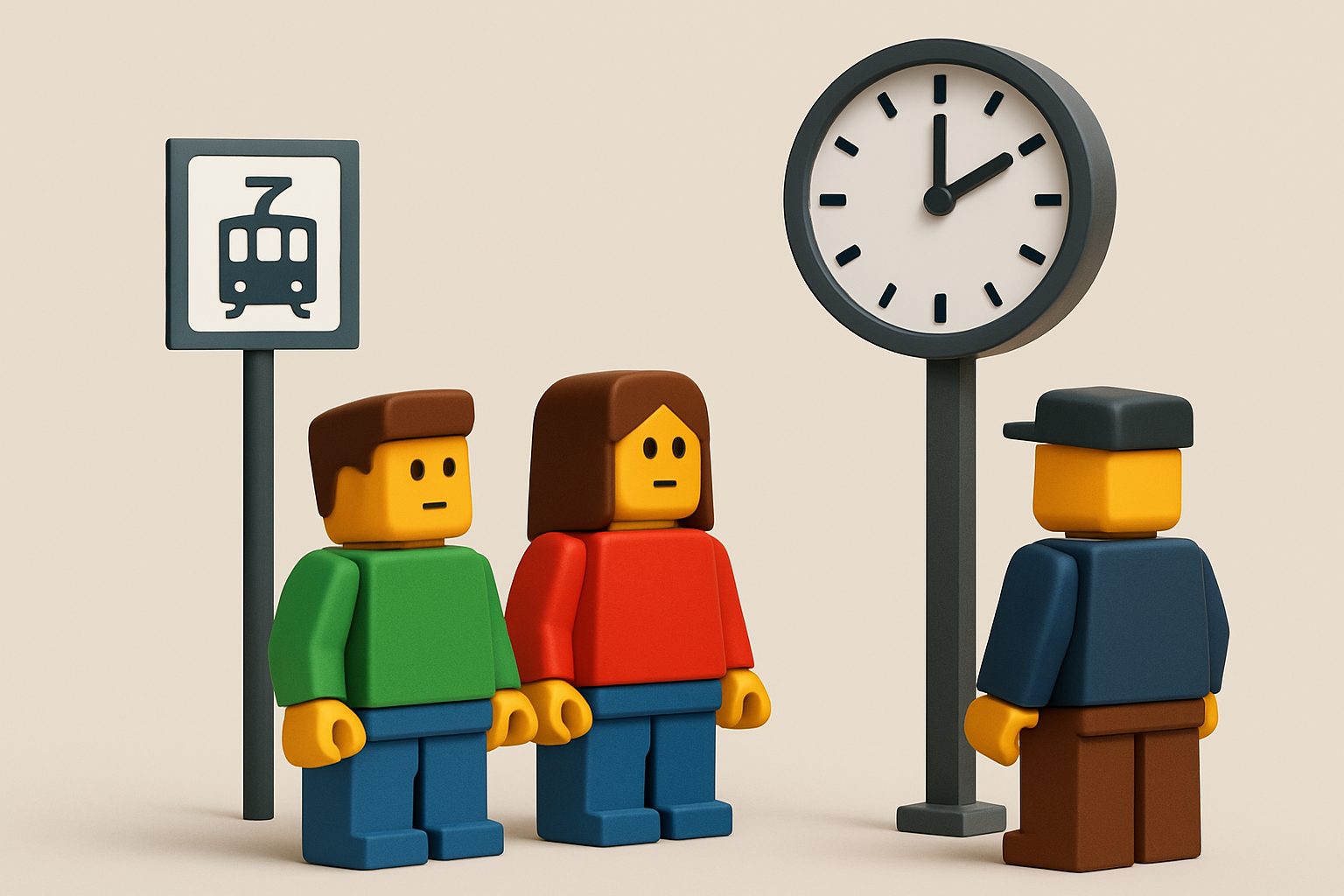
What time is it? — lesson cover

Ask & answer

Question is plural “horas”. Answers often start with “São…” or “É…” for one o’clock.

  • Que horas são?
  • São três horas.
  • É uma hora.
  • São dez e meia.

Trap: às vs são

São = it is (telling the time). Às = at (when something happens).

  • São sete e meia.
  • Começo às nove.
  • Não: Começo são nove.

Parts of the hour

e quarto / e meia / menos um quarto are enough for A1 daily life.

  • São duas e quarto.
  • São sete e meia.
  • São nove menos um quarto.

Key words

  • Que horas são? What time is it?

    Desculpe, que horas são?

    Excuse me, what time is it?

    Que horas são? — What time is it?
  • e meia half past

    São oito e meia.

    It’s half past eight.

    e meia — half past
  • às … at … (o’clock)

    Começo às nove.

    I start at nine.

    às … — at … (o’clock)
  • o relógio clock / watch

    O relógio está atrasado.

    The clock is slow.

    o relógio — clock / watch
  • e quarto quarter past

    São duas e quarto.

    It’s quarter past two.

    e quarto — quarter past
  • desculpe excuse me

    Desculpe, que horas são?

    Excuse me, what time is it?

    desculpe — excuse me
  • o elétrico tram

    O elétrico é às sete e quarenta.

    The tram is at 7:40.

    o elétrico — tram
  • minutos minutes

    Daqui a dez minutos.

    In ten minutes.

    minutos — minutes
  • obrigado / obrigada thank you

    Obrigada.

    Thank you.

    obrigado / obrigada — thank you
  • começar to start

    A aula começa às nove.

    Class starts at nine.

    começar — to start

At the elétrico stop

Inês: Desculpe, que horas são? Bruno: São sete e meia. Inês: Obrigada. O elétrico é às sete e quarenta? Bruno: Sim. Chega daqui a dez minutos. Inês: Perfeito. Vai para o centro? Bruno: Sim, até ao Martim Moniz. Inês: Ótimo. Obrigada outra vez. Bruno: De nada. Boa viagem.

Listening focus

São sete e meia.

What time does Bruno say it is?

Quick check · 21 questions

Mostly choose-the-right-option drills — tap an answer to check yourself.

  • Which question asks for the time?

  • “São dez e meia” means…

  • Ask the time.

    Que _____ são?

  • Order the tram-stop exchange.

    Tap chunks in order…
  • Match the clock phrase.

    • e meia
    • e quarto
    • às nove
  • “Começo às nove” uses às because…

  • “São sete e meia” =

  • “e quarto” often means…

  • Current time uses…

  • “Começo às nove” — às marks…

  • Ask the time politely:

  • Trap: mixing “São” and “às” — which tells the clock now?

  • “O relógio” means…

  • True or false: “Obrigada” can close a time exchange.

  • “Minutos” means…

  • Tram context: “o elétrico” is…

  • “São meio-dia” style — which asks the time?

  • Brazilian “Que horas são?” is shared; avoid BR-only clock slang as the target. Best pt-PT half-hour:

  • Order at the stop: ask → answer → thank. Middle line is…

  • “Começar” means…

  • 7:15 in this lesson’s style is closest to…

Say it

Ask a stranger the time, then thank them.

Mini writing

Write 2–3 lines: ask the time, answer with e meia, say when something starts.

Scaffold: Que horas são? São … A aula começa às …