

Quick Answer
CIPLE A2 grammar covers: present, past (pretérito perfeito), pretérito imperfeito (recognition in reading), and future (ir + infinitive); ser vs estar; definite and indefinite articles; contractions (de/em + article; a/por + article); possessives (meu/minha and definite article in European Portuguese); demonstratives (este/esse/aquele); por vs para for cause/route vs purpose/recipient/deadline; prepositions (de, em, a, para, com); direct and indirect object pronouns; and basic sentence connectors (porque, mas, quando, se). You don't need subjunctive or compound tenses at A2 level.
You've learned 600 words. You can recognise them. You can look them up. But when it's time to actually say something — or write those 60–80 words the CIPLE exam requires — the words don't come together.
That gap between vocabulary and sentences is grammar. Not the painful kind. The logical kind. Portuguese has a clean, predictable structure. Once you see it, everything else — the tenses, the verb forms, the way ideas connect — falls into place.
Reference grammar for CIPLE A2 — verb forms and sentence patterns that appear on the paper, not literary Portuguese. Read once for the map; return to sections when mocks flag errors.
📑 Table of Contents
- The Logic of the Language: How Portuguese Sentences Work
- Articles: The Rule You Cannot Skip
- 2a. Contractions with a and por (ao, à, pelo, pela)
- 2b. Possessives: meu, minha — agreement with the noun
- 2c. Demonstratives: este, esse, aquele
- 2d. por vs para — cause, route, and exchange vs goal and recipient
- Adjectives: How Words Agree With Each Other
- The 16 Verbs That Run the Language
- 4b. The Next 20 Verbs: Opinions, States, and Daily Actions
- ser vs estar: The Most Important Distinction in Portuguese
- Multi-Meaning Verbs: One Word, Many Uses
- The Four Tenses You Actually Need
- Modal Verbs: Want, Can, Must, Need
- Building Any Sentence: Positive, Negative, Question
- Connectors: Gluing Ideas Together
- Pronouns: Who Is Doing What
- Numbers, Time, Dates, and Days
- Directions and Location
- 20 Action Verbs for CIPLE Topics
- Writing Formulas for the CIPLE Exam
- European vs Brazilian Portuguese: What Changes for CIPLE
- The hyphen with object pronouns (Deixou-me, Dá-me…)
- Colours: basic adjectives
🧱 1. The Logic of the Language: How Portuguese Sentences Work
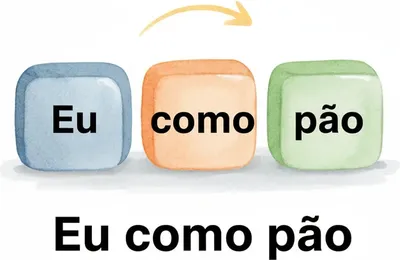
Every Portuguese sentence is built on the same foundation:
┌──────────────┐   ┌──────────────┐   ┌──────────────┐
│   SUBJECT    │ + │    VERB      │ + │   OBJECT     │
│  Eu / Maria  │   │  como/compra │   │ pão / leite  │
└──────────────┘   └──────────────┘   └──────────────┘

  Eu    como    pão.        → I eat bread.
  Maria compra  leite.      → Maria buys milk.
  O João mora   em Lisboa.  → João lives in Lisbon.
This is Subject → Verb → Object. The same order as English. If you know nothing else about Portuguese grammar, this pattern will get you through most situations.
Frases curtas em português (diga em voz alta)
O Pedro lê o jornal.
A Maria bebe um café.
Nós compramos pão à padaria.
Eles esperam o autocarro.
A vizinha rega as plantas.
Os miúdos brincam no parque.
Now, three things work differently from English:
💬 1.1 Subjects are often dropped
In English, you must say I eat. You can't just say eat. In Portuguese, you can — because the verb ending already tells you who is doing the action.
Eu moro em Lisboa.     → I live in Lisbon.
Moro em Lisboa.        → (I) live in Lisbon.   ← more natural in speech

Ela trabalha no banco. → She works at the bank.
Trabalha no banco.     → (She) works at the bank.
Both versions are correct. In everyday speech, the subject pronoun is usually dropped unless you're emphasising or contrasting (Eu não, ela sim — Not me, her yes).
🎨 1.2 Adjectives follow nouns — and they agree
In English: a big apartment. In Portuguese: um apartamento grande — a apartment big. The adjective comes after, and it changes its ending to match the noun's gender and number.
um apartamento grande    → a big apartment       (masculine singular)
uma casa grande          → a big house           (feminine singular)
dois apartamentos grandes → two big apartments   (masculine plural)
duas casas grandes       → two big houses        (feminine plural)
Most adjectives ending in -e don't change for gender (grande stays grande for both). Adjectives ending in -o change to -a for feminine.
um carro bonito    → a beautiful car       (masc)
uma cidade bonita  → a beautiful city      (fem)
um dia frio        → a cold day            (masc)
uma noite fria     → a cold night          (fem)
💡 Quick rule: If the adjective ends in -o, change it to -a for feminine nouns. If it ends in -e or a consonant, it usually stays the same for both genders. Add -s for plural.
🔧 1.3 Verbs change ending based on who acts
This is the biggest structural difference from English. Where English says I eat / you eat / he eats with only one change, Portuguese changes the verb ending for every person.
🔵 The good news: Once you learn these endings for one regular verb, you know them for hundreds of verbs. Portuguese verb endings are highly consistent.
We'll cover this fully in sections 4 and 7. For now, just know that the verb form always tells you who the subject is — which is why you can drop the pronoun.
📝 2. Articles: The Rule You Cannot Skip
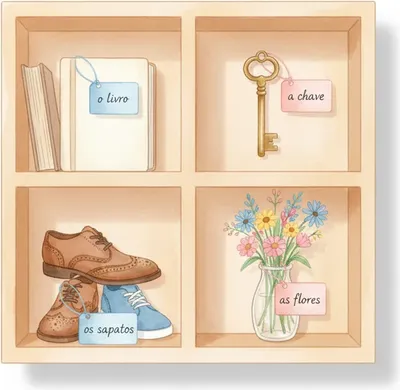
Portuguese has two types of articles: definite (the) and indefinite (a/an). Unlike English, every noun in Portuguese has a gender — masculine or feminine — and the article changes to match.
Definite articles (the)
             MASCULINE    FEMININE
Singular     o            a
Plural       os           as

o livro      → the book
a mesa       → the table
os livros    → the books
as mesas     → the tables
Indefinite articles (a / an)
             MASCULINE    FEMININE
Singular     um           uma
Plural       uns          umas

um livro     → a book
uma mesa     → a table
uns livros   → some books
umas mesas   → some tables
Frases com artigos
O cão está no jardim.
Preciso de uma chave.
Há um problema sério.
São uns dias excelentes.
A vizinha tem um gato preto.
Quero um café e um pastel de nata.
⚠️ English speakers often skip the article. In Portuguese, you almost always need one. You don't say Tenho carro (I have car) — you say Tenho um carro (I have a car). Articles are not optional decoration; they're part of the noun.
Articles contract with prepositions
This is something that catches beginners off guard. When the prepositions de (of/from) and em (in/at) appear before an article, they fuse together:
de + o  = do       Venho do mercado.      → I'm coming from the market.
de + a  = da       Venho da escola.       → I'm coming from the school.
de + os = dos      Gosto dos livros.      → I like the books.
de + as = das      Gosto das flores.      → I like the flowers.

em + o  = no       Moro no Porto.         → I live in Porto.
em + a  = na       Trabalho na cidade.    → I work in the city.
em + os = nos      Estou nos correios.    → I'm at the post office.
em + as = nas      Moro nas montanhas.    → I live in the mountains.
🎯 CIPLE exam: These contractions appear constantly in reading and listening. Venho do trabalho (I'm coming from work), Moro na Amadora (I live in Amadora), Estou no hospital (I'm at the hospital). Recognising them automatically saves you time under pressure.
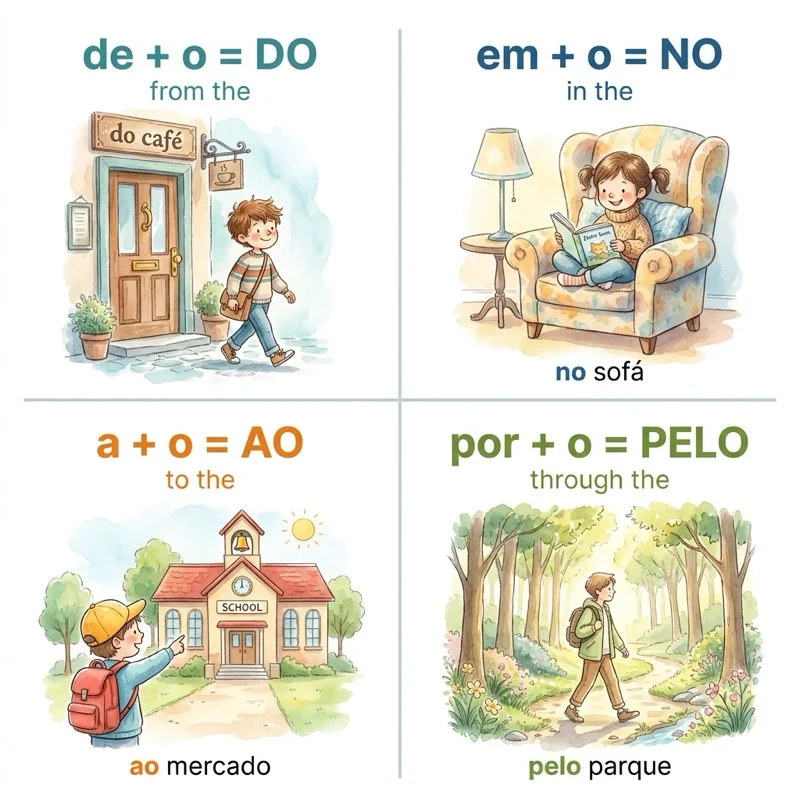
Contractions with a and por (ao, à, pelo, pela)
The preposition a (to/at) and por (through/by/for) also fuse with the definite article — the same idea as do/da and no/na, but with different shapes:
a + o  = ao       Vou ao banco.           → I'm going to the bank.
a + a  = à        Chego à reunião.        → I'm arriving at the meeting.
a + os = aos      Vamos aos correios.     → We're going to the post office.
a + as = às       Abre às nove.           → It opens at nine.

por + o  = pelo   Passo pelo parque.     → I go by / through the park.
por + a  = pela   Passo pela farmácia.  → I pass by the pharmacy.
por + os = pelos  Vou pelos correios.    → I go via the post office.
por + as = pelas  Desculpe pelas chamadas. → Sorry about the calls.
🎯 CIPLE: You will see ao, à, and pelo/pela in directions, appointments, and formal letters (e.g. peço desculpa pelo inconveniente).
Possessives: meu, minha — match the thing you own
Possessive adjectives agree in gender and number with the noun they describe — not with the owner. Meu goes with masculine singular nouns; minha with feminine singular; plural forms are meus / minhas.
o meu carro / a minha casa           my car / my house
os meus filhos / as minhas chaves     my children / my keys

o teu / a tua / os teus / as tuas     your (informal)
o seu / a sua / os seus / as suas     his, her, its, their, or formal "your" (context decides)
Possessivos em frases curtas:
O meu telemóvel está na mala.
A minha mãe telefona todos os dias.
Os nossos documentos estão prontos.
As tuas chaves estão na mesa.
O carro dele está na garagem.⚠️ European Portuguese: In Portugal it is normal to use the definite article with possessives when the thing is specific: a minha família, o meu trabalho. For CIPLE writing and speaking, follow this pattern.
Demonstratives: este, esse, aquele
These words mean "this/that" and must agree with the noun (masc./fem., sing./pl.). In European Portuguese, the distance picture is roughly: este — near the speaker; esse — near the listener or between people; aquele — farther away. Listening tasks use them constantly in shops and directions.
este livro / esta mesa / estes bilhetes / estas flores
esse carro / essa rua / esses documentos / essas cadeiras
aquele edifício / aquela paragem / aqueles prédios / aquelas lojas
Este casaco é meu.
Gosto deste café; passa-me esse açúcar?
Aquele edifício é o hospital.
Estas malas são pesadas.
Aquelas senhoras são minhas colegas.por vs para — not interchangeable
Rough A2 rule: para points forward — goal, recipient, deadline, purpose ("in order to" with infinitive). por often points backward or through — cause, reason, route, exchange, duration, "on behalf of".
Vou para o trabalho.              → I'm going to work. (destination)
É para ti.                         → It's for you. (recipient)
Estudo para aprender.              → I study (in order) to learn.
A entrega é para sexta-feira.      → Delivery is for Friday. (deadline)

Obrigado pelo café.               → Thanks for the coffee. (exchange / thanks "for")
Passei por Lisboa.                → I passed through Lisbon. (route)
Fiz isto por ti.                  → I did this for you. (on your behalf)
Por causa da greve…             → Because of the strike… (cause)
🎯 CIPLE writing: Wrong preposition is a common slip. If you mean destination, recipient, or purpose, start with para; if you mean thanks for something, route, or because of, por is often right.
✨ 3. Adjectives: How Words Agree With Each Other
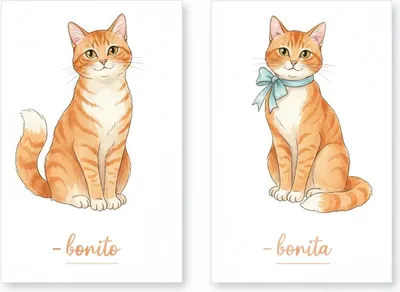
You learned vocabulary as isolated words. In sentences, adjectives don't stand alone — they connect to the noun they describe, matching its gender and number. This is called agreement.
Gender agreement
Most adjectives follow this pattern:
ADJECTIVE       MASC. SINGULAR   FEM. SINGULAR    MEANING
bonito/bonita   um dia bonito    uma noite bonita  beautiful
frio/fria       um dia frio      uma noite fria    cold
cansado/cansada um homem cansado uma mulher cansada  tired
novo/nova       um livro novo    uma ideia nova    new
Adjectives ending in -e or -ista don't change for gender:
grande          um apartamento grande   uma cidade grande     big
interessante    um livro interessante   uma aula interessante interesting
A casa é grande e antiga.
O café está quente; bebe já.
Ela está cansada hoje.
São ideias interessantes.
O quarto está arrumado e cheiroso.Number agreement: adding -s
Add -s for plural nouns. If the adjective ends in a vowel, just add -s. If it ends in a consonant, add -es.
um apartamento grande    → dois apartamentos grandes
uma pessoa simpática     → duas pessoas simpáticas
um homem feliz           → dois homens felizes  (z → zes)
💡 For the CIPLE writing section, agreement errors cost points — especially gender errors. The most common mistake: writing uma dia bonito instead of um dia bonito. When you write a sentence, check: does the adjective ending match the noun's gender?
🔟 4. The 16 Verbs That Run the Language
You could learn 500 verbs, but sixteen verbs do the heavy lifting of everyday Portuguese. Master these and you can express almost any basic situation.
VERB       MEANING              WHY IT MATTERS
ser        to be (permanent)    identity, origin, profession
estar      to be (temporary)    location, feelings, states
ir         to go                movement + future tense
fazer      to do / to make      actions, weather, time
ter        to have              possession, age, obligation
dizer      to say / to tell     opinions, reported speech, "they say"
vir        to come              movement toward speaker
ver        to see               perception, plans ("see you soon")
poder      can / to be able     ability, permission
dar        to give              giving, fixed phrases (e.g. dá para…)
querer     to want              opinions, requests, desires
saber      to know (fact/skill) distinction from poder; very frequent
falar      to speak             template for hundreds of -ar verbs
morar      to live (reside)     housing — in every CIPLE
trabalhar  to work              work topic — constant
gostar de  to like              opinions; always followed by de
The 16 core verbs — present tense on each card + examples
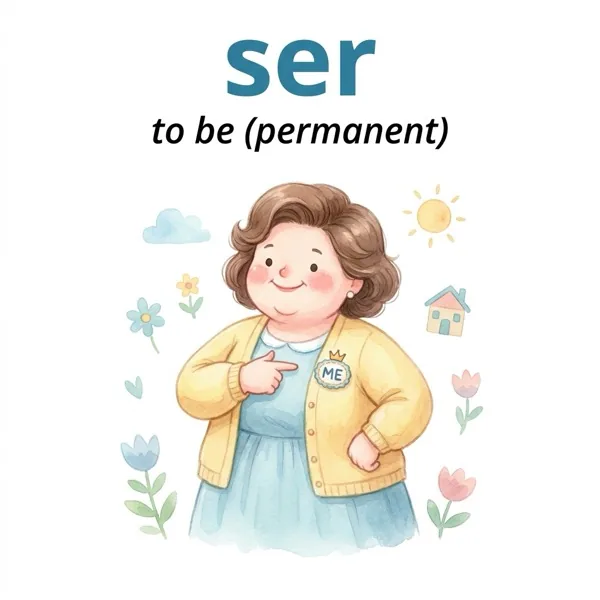
ser
to be (permanent)
eu        sou       I am
tu        és        you are (informal)
ele/ela   é         he/she/it is
nós       somos     we are
vocês     são       you are (plural)
eles/elas são       they are
Sou português.
I am Portuguese.
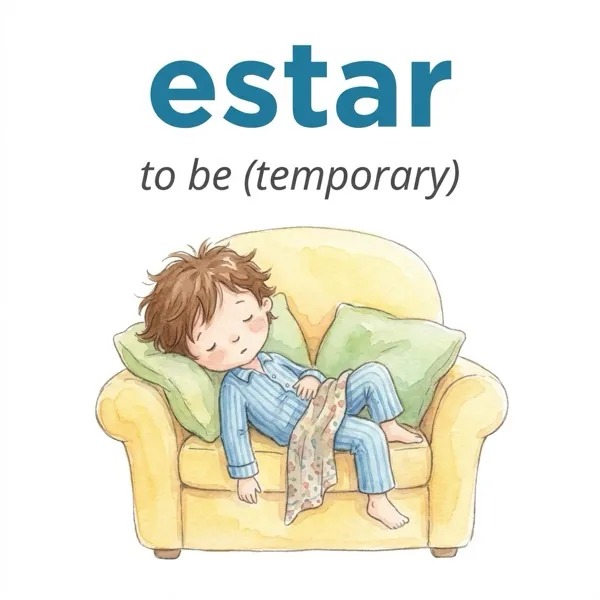
estar
to be (temporary)
eu        estou     I am
tu        estás     you are
ele/ela   está      he/she is
nós       estamos   we are
vocês     estão     you are (plural)
eles/elas estão     they are
Estou cansado.
I am tired.

ter
to have
eu        tenho     I have
tu        tens      you have
ele/ela   tem       he/she has
nós       temos     we have
vocês     têm       you have (plural)
eles/elas têm       they have
Tenho um cão.
I have a dog.
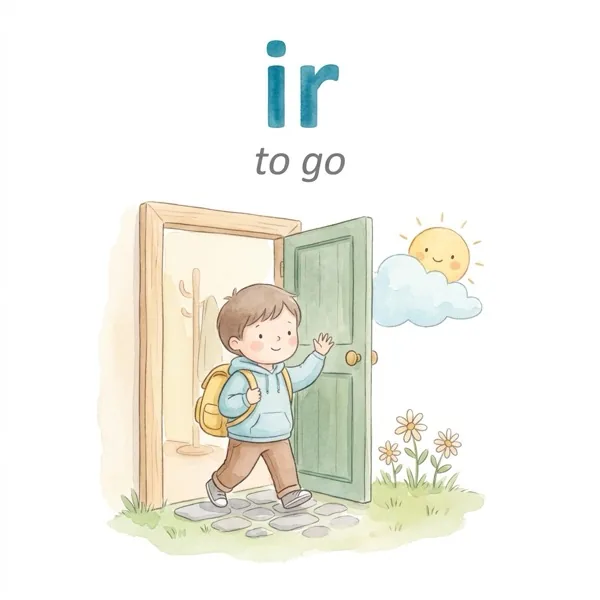
ir
to go
eu        vou       I go / I'm going
tu        vais      you go
ele/ela   vai       he/she goes
nós       vamos     we go
vocês     vão       you go (plural)
eles/elas vão       they go
Vou ao mercado.
I'm going to the market.

fazer
to do / make
eu        faço      I do/make
tu        fazes     you do/make
ele/ela   faz       he/she does/makes
nós       fazemos   we do/make
vocês     fazem     you do/make
eles/elas fazem     they do/make
Faço exercício todos os dias.
I exercise every day.
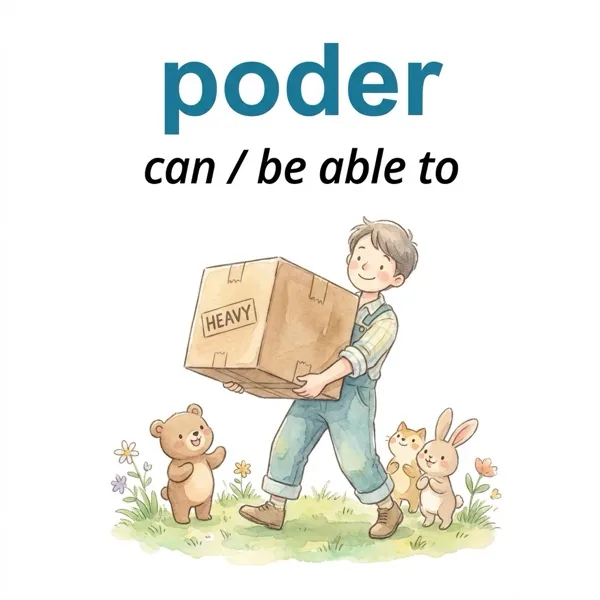
poder
can / be able to
eu        posso     I can
tu        podes     you can
ele/ela   pode      he/she can
nós       podemos   we can
vocês     podem     you can (plural)
eles/elas podem     they can
Posso ajudar?
Can I help?
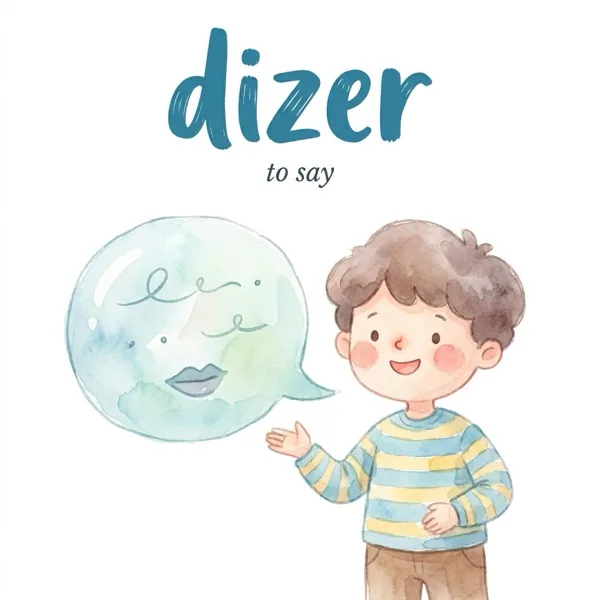
dizer
to say / to tell
eu        digo      I say
tu        dizes     you say
ele/ela   diz       he/she says
nós       dizemos   we say
vocês     dizem     you say (plural)
eles/elas dizem     they say
Digo a verdade.
I tell the truth.

ver
to see / watch
eu        vejo      I see
tu        vês       you see
ele/ela   vê        he/she sees
nós       vemos     we see
vocês     veem      you see (plural)
eles/elas veem      they see
Vejo o mar daqui.
I can see the sea from here.
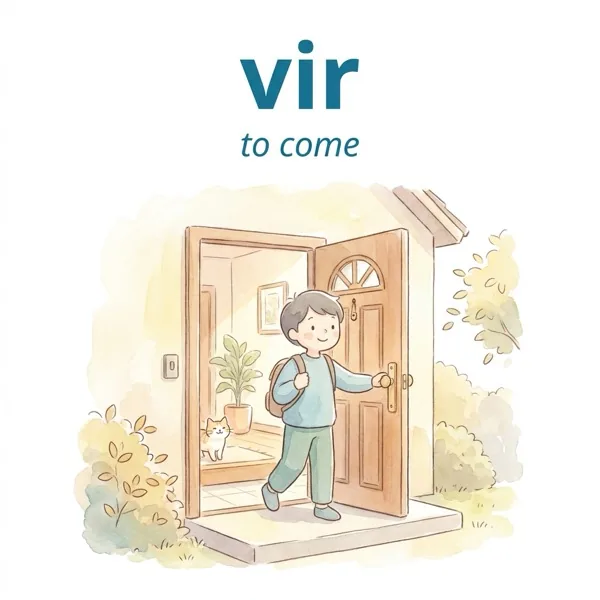
vir
to come
eu        venho     I come
tu        vens      you come
ele/ela   vem       he/she comes
nós       vimos     we come
vocês     vêm       you come (plural)
eles/elas vêm       they come
Venho de Lisboa.
I come from Lisbon.

dar
to give
eu        dou       I give
tu        dás       you give
ele/ela   dá        he/she gives
nós       damos     we give
vocês     dão       you give (plural)
eles/elas dão       they give
Dou-lhe um livro.
I give him a book.
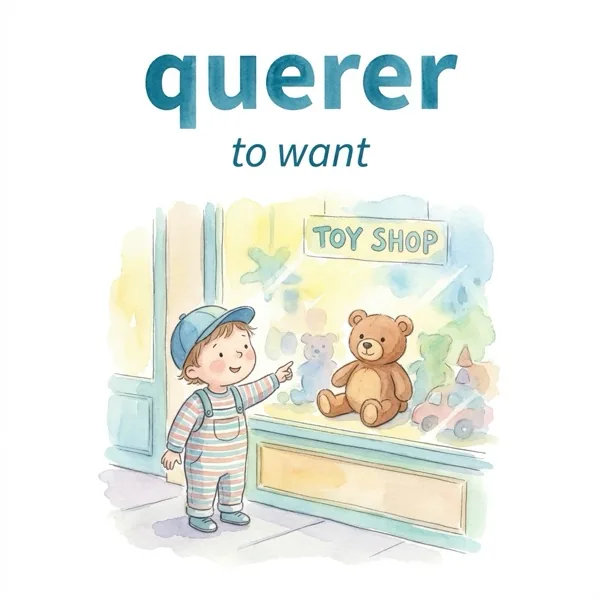
querer
to want
eu        quero     I want
tu        queres    you want
ele/ela   quer      he/she wants
nós       queremos  we want
vocês     querem    you want (plural)
eles/elas querem    they want
Quero aprender português.
I want to learn Portuguese.
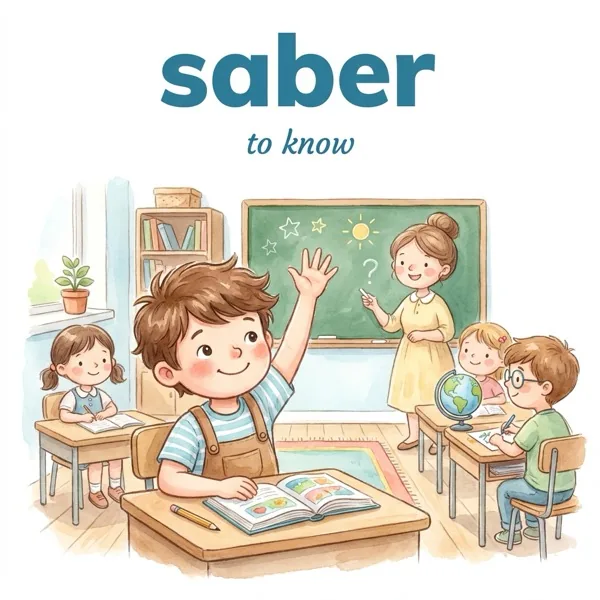
saber
to know (facts / skill)
eu        sei       I know
tu        sabes     you know
ele/ela   sabe      he/she knows
nós       sabemos   we know
vocês     sabem     you know (plural)
eles/elas sabem     they know
Sei falar inglês.
I know how to speak English.
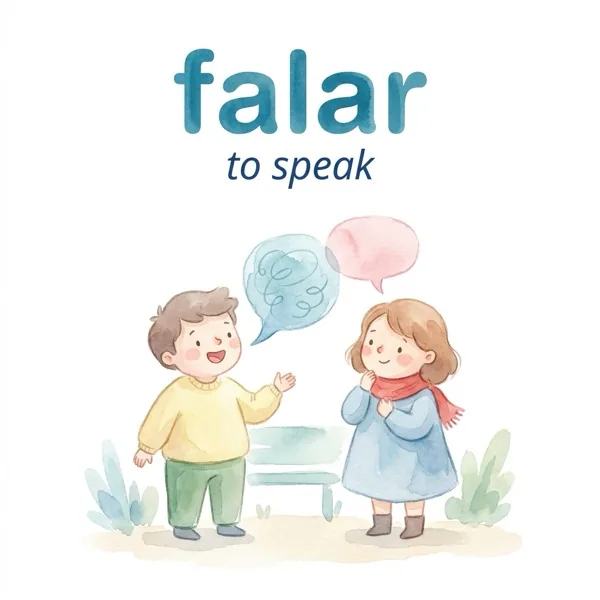
falar
to speak — -ar template
eu        falo
tu        falas
ele/ela   fala
nós       falamos
vocês     falam
eles/elas falam
Falo português todos os dias.
I speak Portuguese every day.
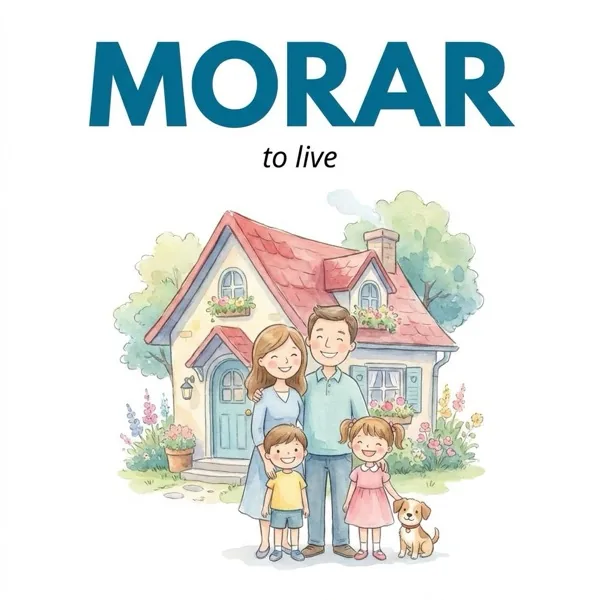
morar
to live / reside — same -ar pattern
eu        moro
tu        moras
ele/ela   mora
nós       moramos
vocês     moram
eles/elas moram
Moro em Lisboa.
I live in Lisbon.
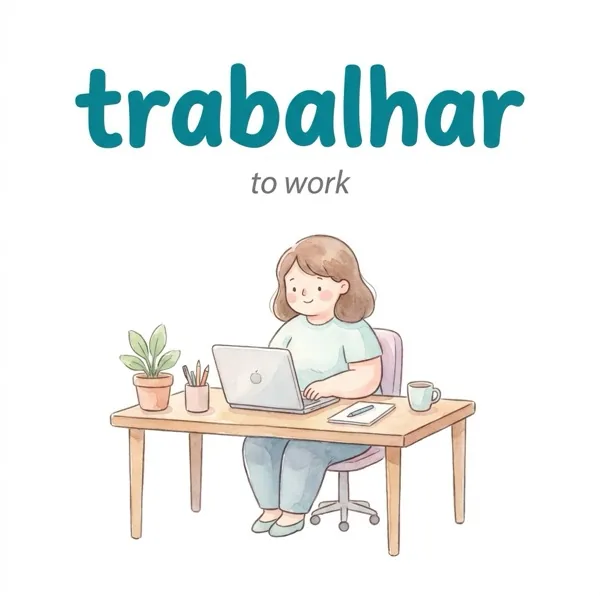
trabalhar
to work — same -ar pattern
eu        trabalho
tu        trabalhas
ele/ela   trabalha
nós       trabalhamos
vocês     trabalham
eles/elas trabalham
Trabalho num escritório.
I work in an office.
gostar de
to like — always + de
eu        gosto de
tu        gostas de
ele/ela   gosta de
nós       gostamos de
vocês     gostam de
eles/elas gostam de

Gosto de Lisboa.         → I like Lisbon.
Gostas de música?        → Do you like music?
Não gosto de esperar.    → I don't like waiting.
Gosto de café.
I like coffee.
The first ten verbs (ser through dar) have irregular present stems — memorise them as a set. The next six complete your core sixteen: querer and saber are irregular too; falar, morar, and trabalhar follow the regular -ar endings; gostar is regular but always needs de before the thing you like. Full present-tense tables are on the cards above — scroll horizontally instead of rereading long blocks here.
Aquecimento: cinco verbos irregulares (uma frase cada)
Sou de Braga.
Estou no escritório até às seis.
Tenho dois filhos e um cão.
Vou a pé para o trabalho quando faz sol.
Faço desporto às terças e às quintas.
💡 falar, morar, trabalhar follow the standard -ar pattern. Once you know the endings (-o / -as / -a / -amos / -am), you can conjugate roughly 300 Portuguese verbs automatically. This is the single most valuable pattern in the language.
Together with the first ten, these six verbs cover most of what you will produce and hear on CIPLE. Ficar is treated separately in Section 6 (many meanings); querer and saber also appear as modals in Section 8.
💡 Learning tip: Don't try to memorise all 16 at once. Learn ser, estar, ter, and ir first — these four cover 60% of your daily usage. Add the others one at a time over two weeks.
🗣️ 4b. The Next 20 Verbs: Opinions, States, and Daily Actions
The sixteen verbs above are your irregular core — you need their forms by heart. The verbs below are all regular or near-regular. You don't need to drill every conjugation table — but you need to recognise them instantly and use them in sentences. They are grouped by function because that's how you'll actually use them.
Verbos regulares, ritmo calmo:
Concordo com o horário proposto.
Não concordo com esta solução.
Explico a situação com calma.
Sinto-me cansado depois do turno.
Preciso de descansar um pouco.
Opinion & speech (for the writing paper)
VERB          MEANING              EXAMPLE
achar         to think / reckon    Acho que está fechado.
pensar        to think             Penso que sim.
parecer       to seem              Parece-me difícil.
concordar     to agree             Concordo contigo.
acreditar     to believe           Não acredito nisso.
explicar      to explain           Pode explicar melhor?
Opinion & speech — quick cards
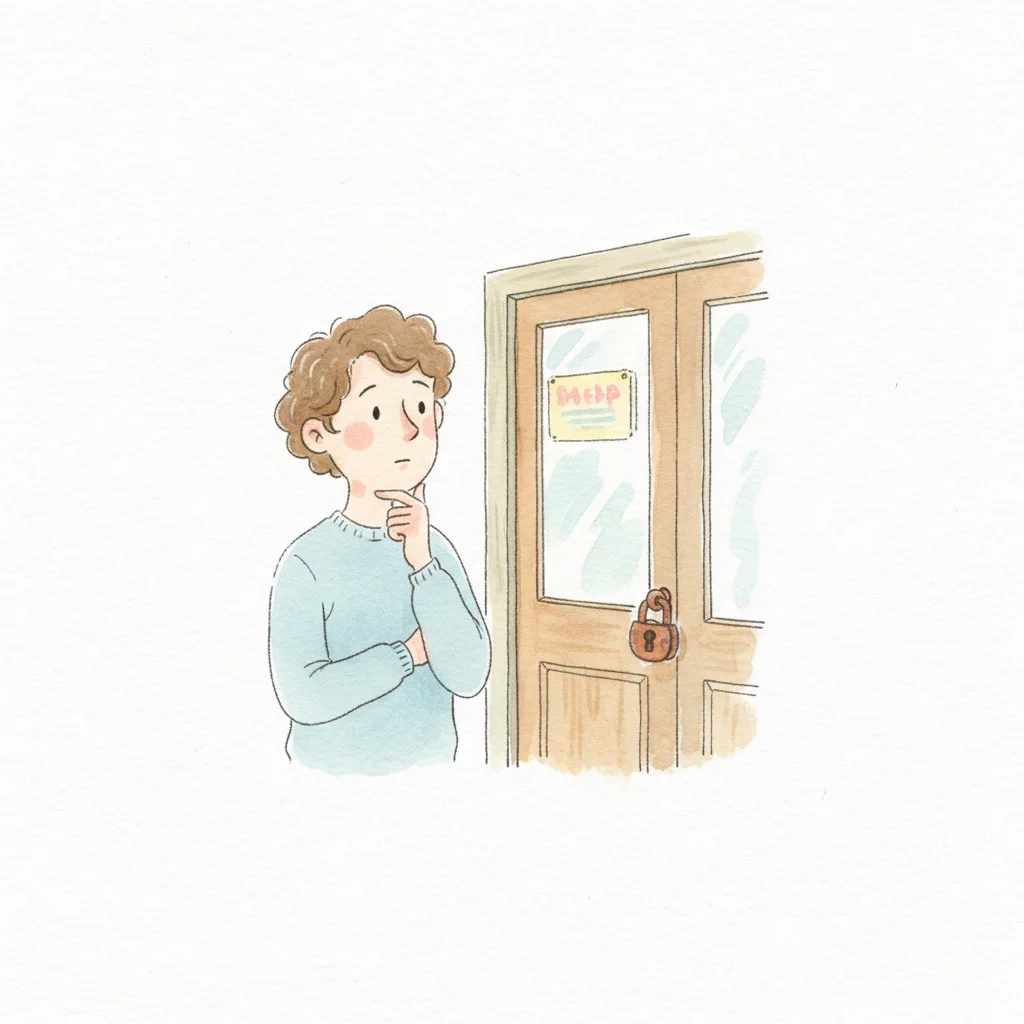
achar
to think / reckon
Acho que está fechado.
I think it's closed.
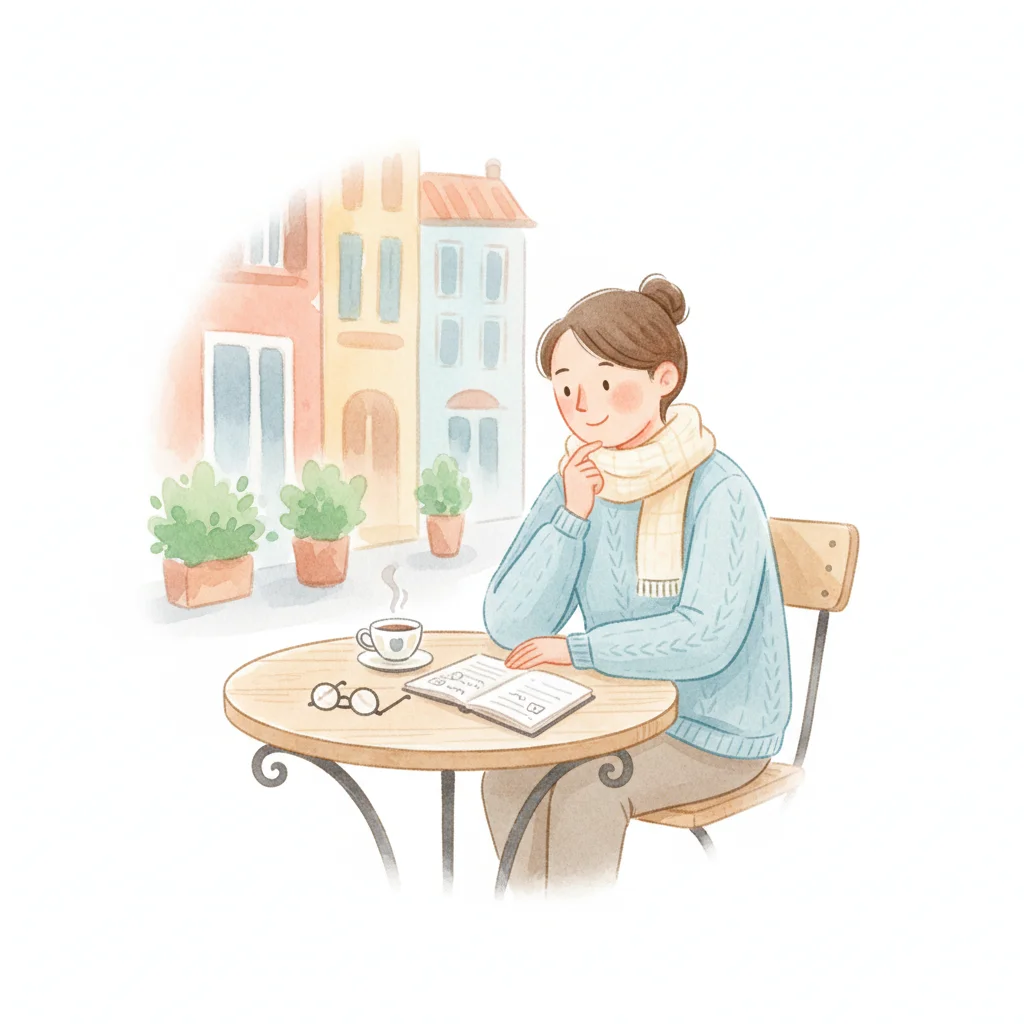
pensar
to think
Penso que sim.
I think so.
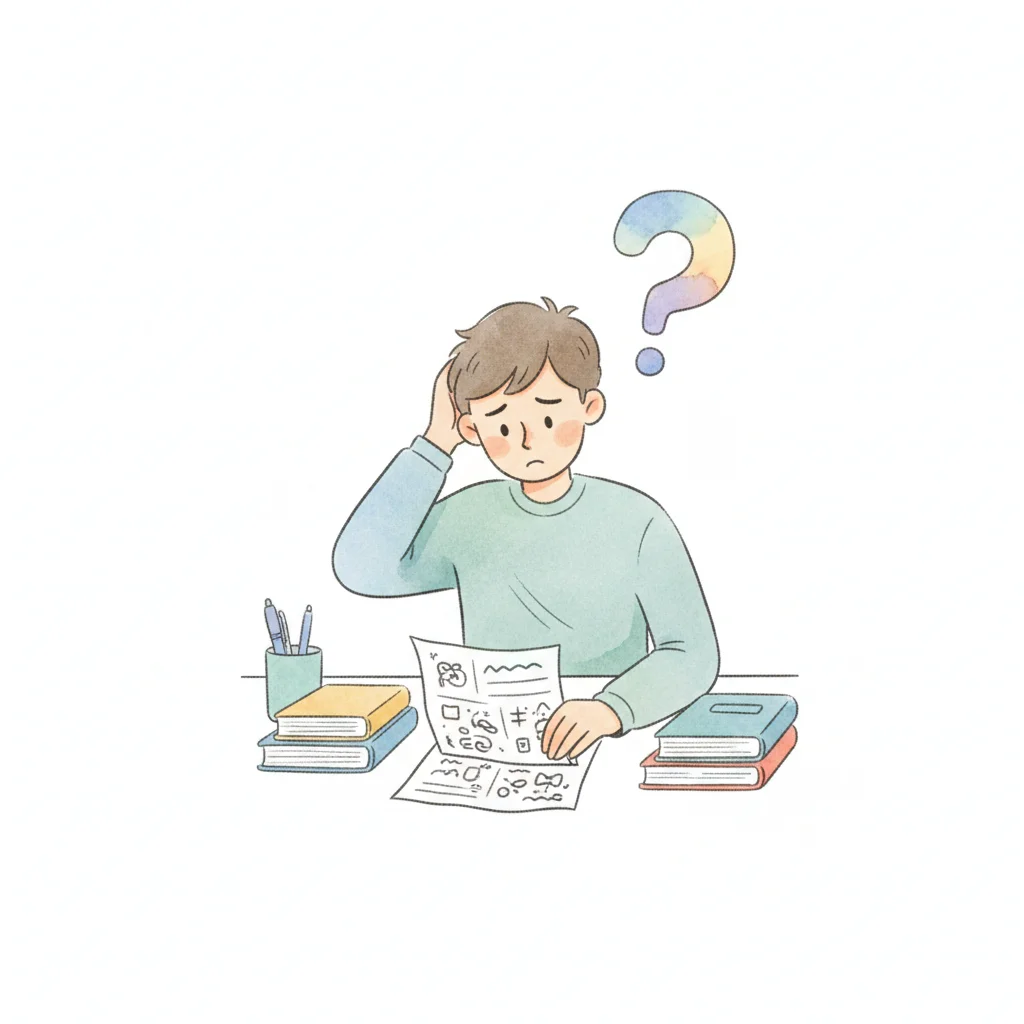
parecer
to seem
Parece-me difícil.
It seems difficult to me.

concordar
to agree
Concordo contigo.
I agree with you.
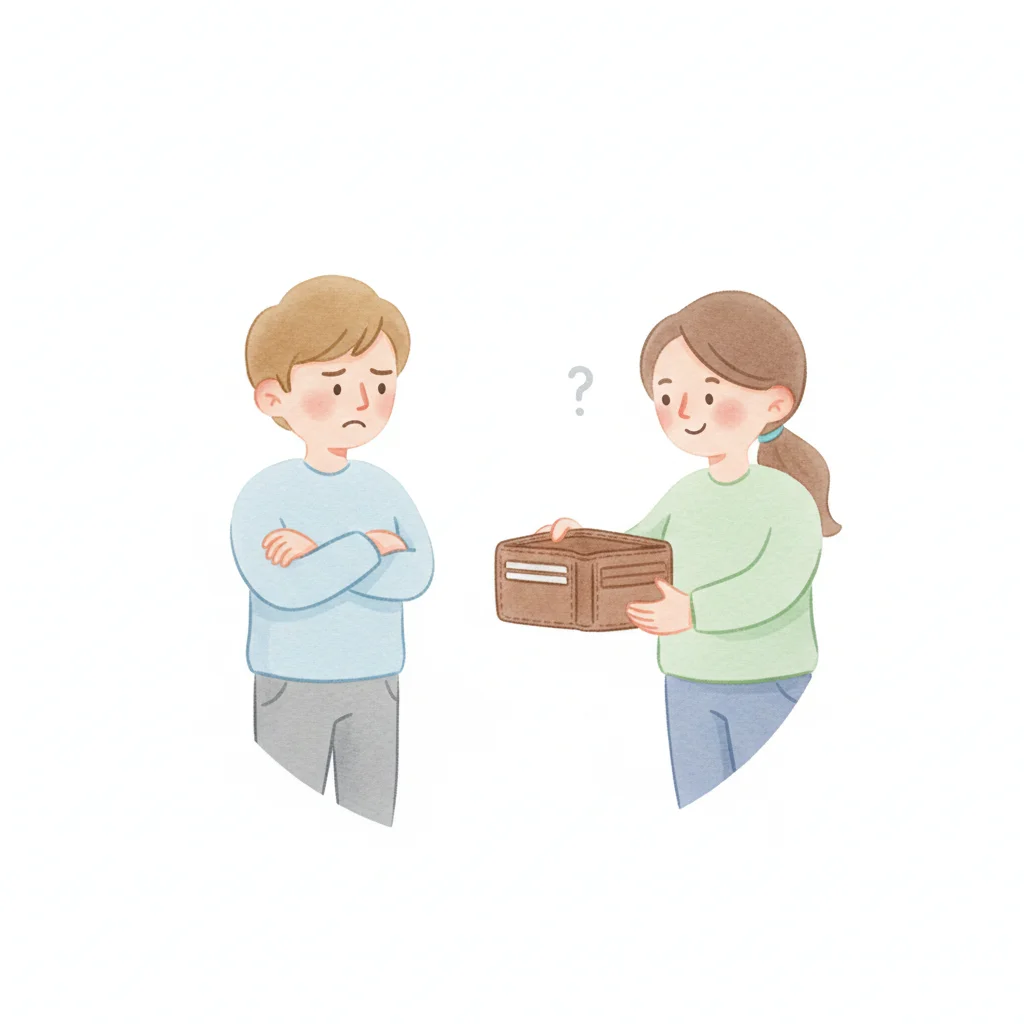
acreditar
to believe
Não acredito nisso.
I don't believe it.
explicar
to explain
Pode explicar melhor?
Can you explain better?
🎯 CIPLE writing: Acho que / Penso que / Parece-me que — these three phrases alone will raise your writing score. They signal opinion, which examiners look for in the longer text task.
States & feelings (health and everyday life)
VERB          MEANING              EXAMPLE
sentir        to feel              Sinto-me cansado.
doer          to hurt / ache       Dói-me a cabeça.
conseguir     to manage / be able  Não consigo dormir.
conhecer      to know (a person)   Conheces o João?
lembrar       to remember          Não me lembro.
precisar de   to need              Preciso de ajuda.
States & feelings — quick cards
sentir
to feel
Sinto-me cansado.
I feel tired.
doer
to hurt / ache
Dói-me a cabeça.
My head hurts.
conseguir
to manage / be able
Não consigo dormir.
I can't get to sleep.

conhecer
to know (a person/place)
Conheces o João?
Do you know João?
lembrar
to remember
Não me lembro.
I don't remember.
precisar de
to need
Preciso de ajuda.
I need help.
⚠️ conhecer vs saber — two ways of "to know": conhecer = to know a person or place (familiarity). saber = to know a fact or skill. Conheço Lisboa. → I know Lisbon (I've been there). Sei onde fica. → I know where it is (I know the fact).
Movement & daily routine
VERB          MEANING              EXAMPLE
entrar        to enter / go in     Entre, por favor.
voltar        to return / come back Volto às 18h.
subir         to go up / get on    Suba as escadas.
descer        to go down / get off Desça na próxima paragem.
mudar         to change / move     Mudei de casa.
ajudar        to help              Pode ajudar-me?
encontrar     to find / meet       Encontrei-o no metro.
Movement & routine — quick cards
entrar
to enter / go in
Entre, por favor.
Come in, please.
voltar
to return / come back
Volto às 18h.
I'll be back at 6 p.m.
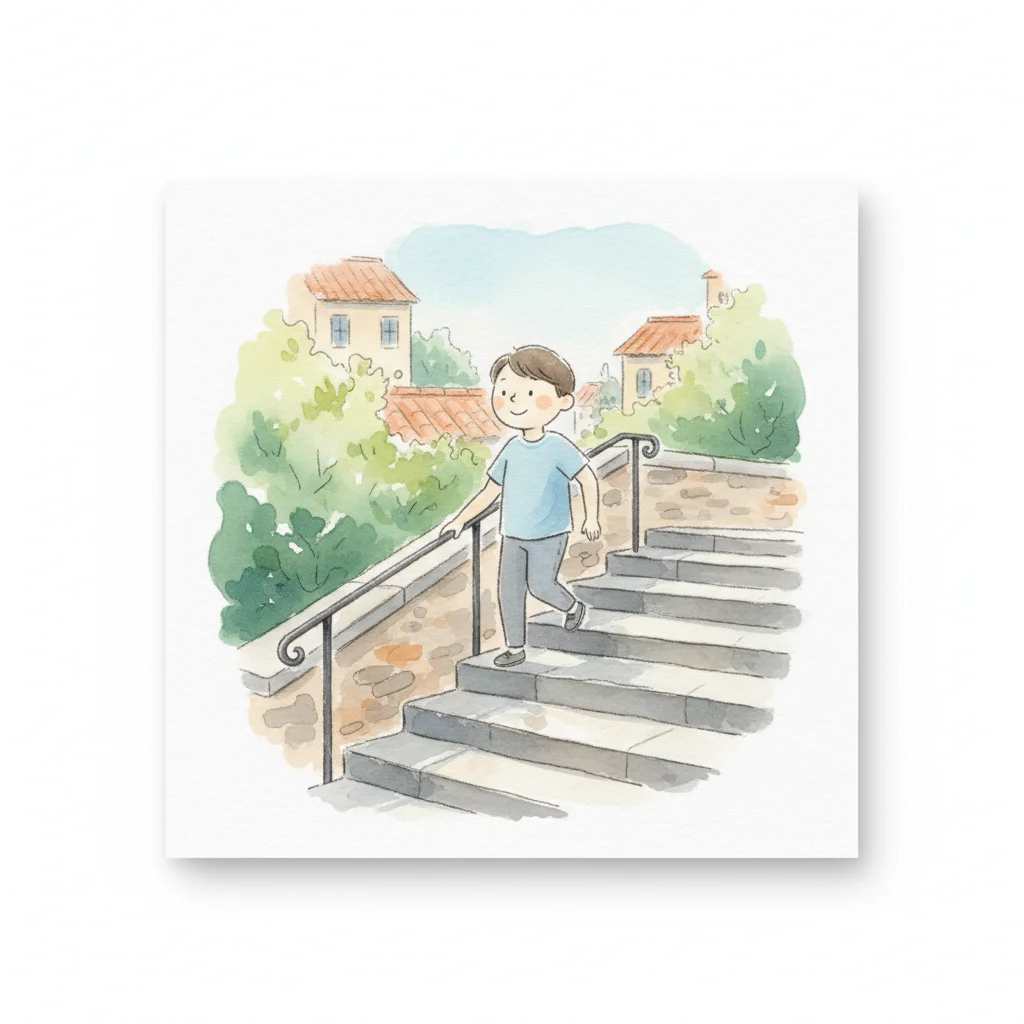
subir
to go up / get on
Suba as escadas.
Go up the stairs.
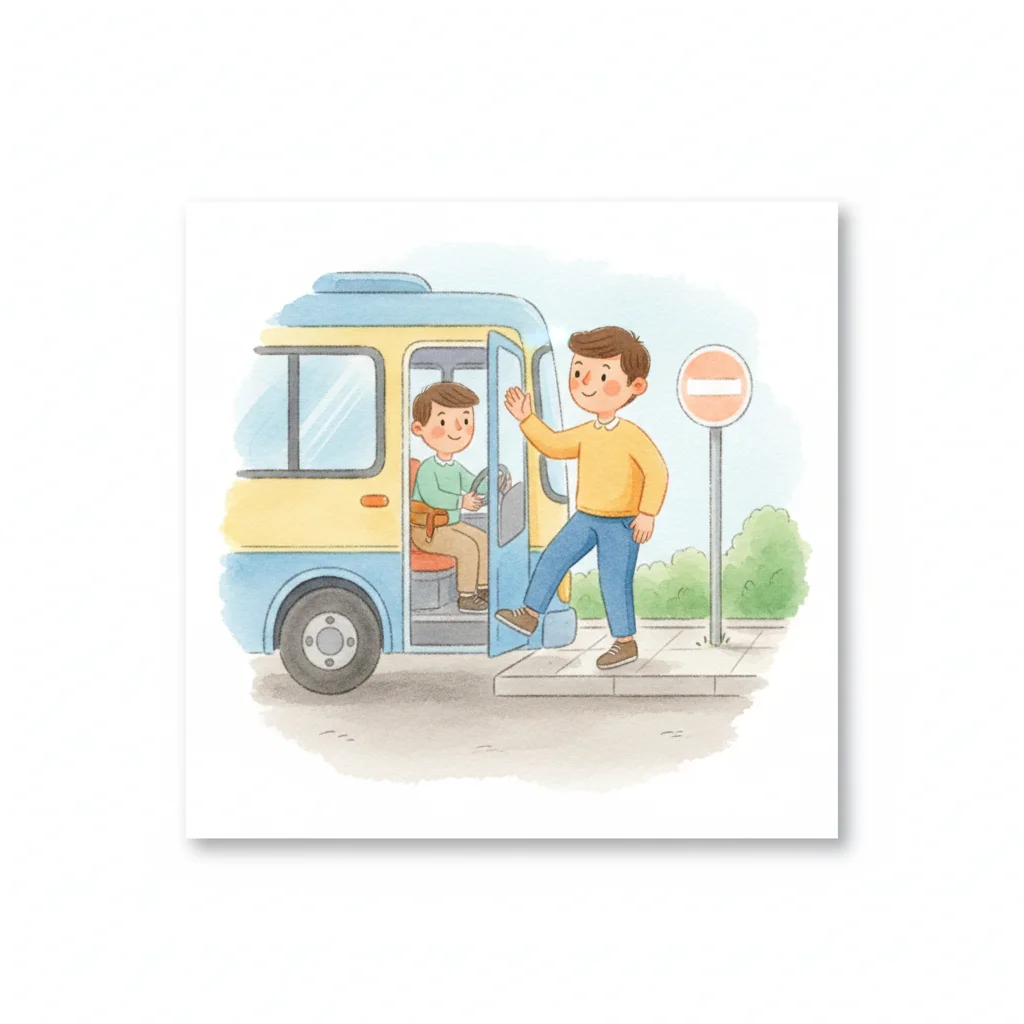
descer
to go down / get off
Desça na próxima paragem.
Get off at the next stop.

mudar
to change / move
Mudei de casa.
I moved house.
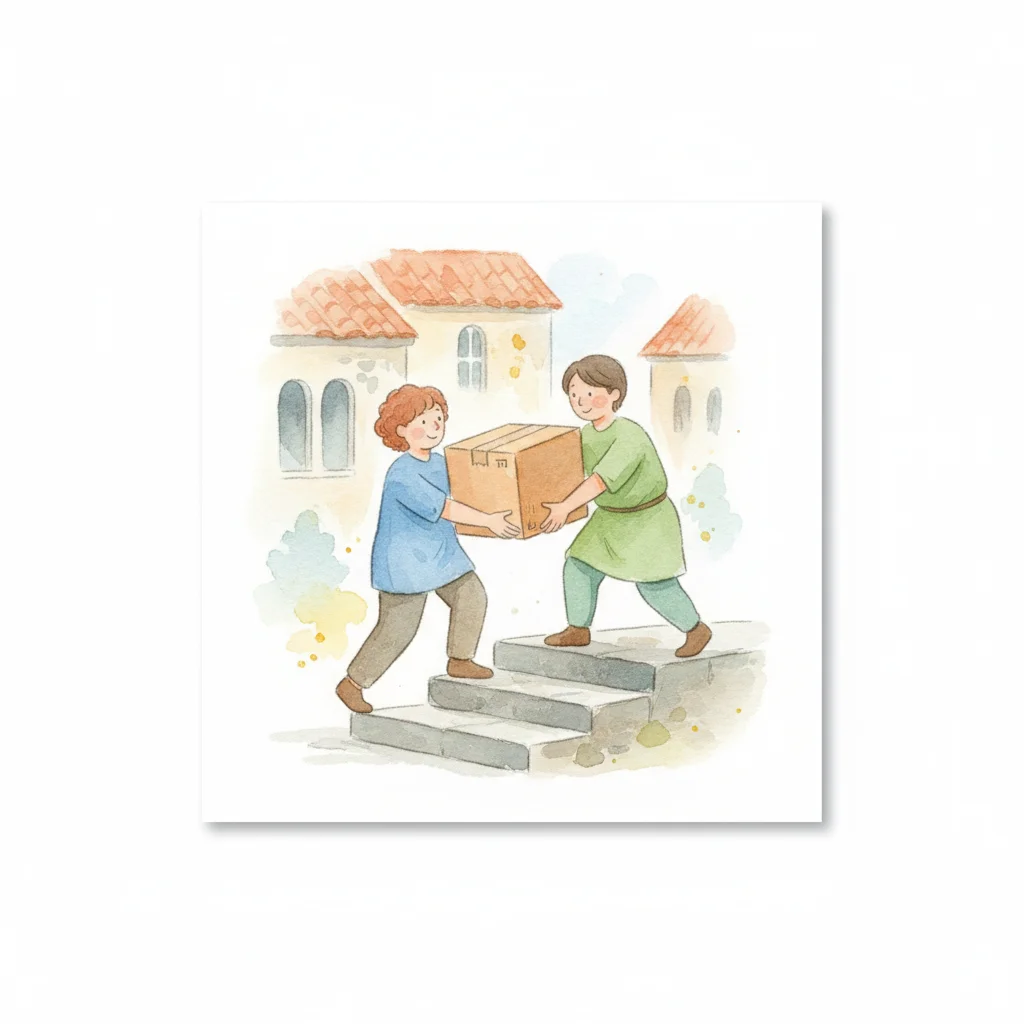
ajudar
to help
Pode ajudar-me?
Can you help me?
encontrar
to find / meet
Encontrei-o no metro.
I met him on the metro.
💡 descer na próxima paragem (get off at the next stop) and subir appear in almost every CIPLE listening task involving transport. Learn them as a pair.
5. ser vs estar: The Most Important Distinction in Portuguese
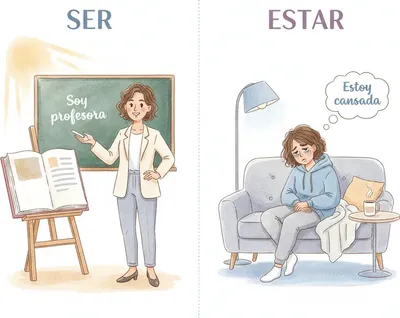
Both mean "to be." English has one verb; Portuguese has two. Choosing the wrong one is the most common mistake English speakers make — and it can change the meaning of what you're saying.
The core logic:
SER                              ESTAR
Permanent / defining traits      Temporary / changeable states
─────────────────────────────    ─────────────────────────────
Who you are                      How you feel right now
Where you're from                Where you are right now
Your profession                  Your current condition
Fixed characteristics            Ongoing situations
When to use ser
Eu sou inglês.              → I am English.          (nationality — permanent)
Ela é médica.               → She is a doctor.       (profession)
O João é alto.              → João is tall.           (physical trait)
Somos de Lisboa.            → We are from Lisbon.    (origin)
A reunião é às 10h.         → The meeting is at 10.  (scheduled event)
O apartamento é grande.     → The apartment is big.  (inherent quality)
When to use estar
Estou cansado.              → I am tired.            (current feeling)
Ela está doente.            → She is sick.           (temporary state)
O João está em casa.        → João is at home.       (current location)
Estamos no trabalho.        → We are at work.        (current location)
O café está quente.         → The coffee is hot.     (temporary quality)
Estás bem?                  → Are you OK?            (current state)
The cases that confuse everyone
⚠️ Ser for locations of events, estar for locations of people and things A conferência é no centro. → The conference is at the centre. (event — ser) O João está no centro. → João is at the centre. (person — estar) Fixed, permanent locations (buildings, cities) also use ser: Lisboa é em Portugal. → Lisbon is in Portugal.
⚠️ Adjectives that change meaning with ser/estar ser bonito → to be beautiful (inherently) estar bonito → to look beautiful (right now) ser frio → to be a cold person (personality) estar frio → to be cold (temperature right now) ser morto → to be dead (state of death) estar morto → to feel dead tired (colloquial)
🎯 CIPLE exam: In the writing section, ser/estar errors are penalised. The most common mistake in student writing: "Estou professor" (wrong) instead of "Sou professor" (correct). Profession, nationality, and identity always use ser.
6. Multi-Meaning Verbs: One Word, Many Uses
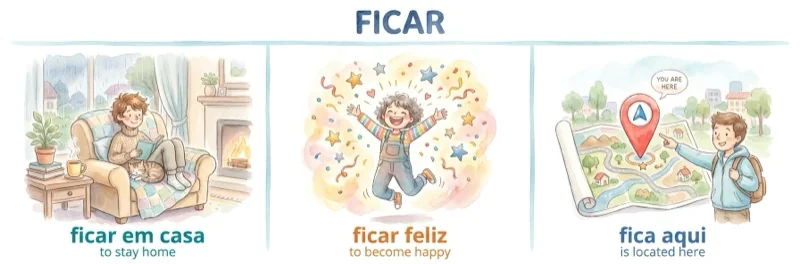
Portuguese has a set of verbs that English translates as several completely different words depending on context. Learning these isn't memorising multiple meanings — it's understanding the single logic behind each verb that generates all its uses.
Mesmos verbos, sentidos diferentes — decore a frase portuguesa:
Dou por terminado.
Dá para ir a pé?
Põe o casaco, está a chover.
Tira a mesa, por favor.
Volto já; espera um minuto.
ficar — the verb that does everything
At its core, ficar means to remain in a state or position. Once you understand that, all its meanings make sense.
ficar — common meanings in examples
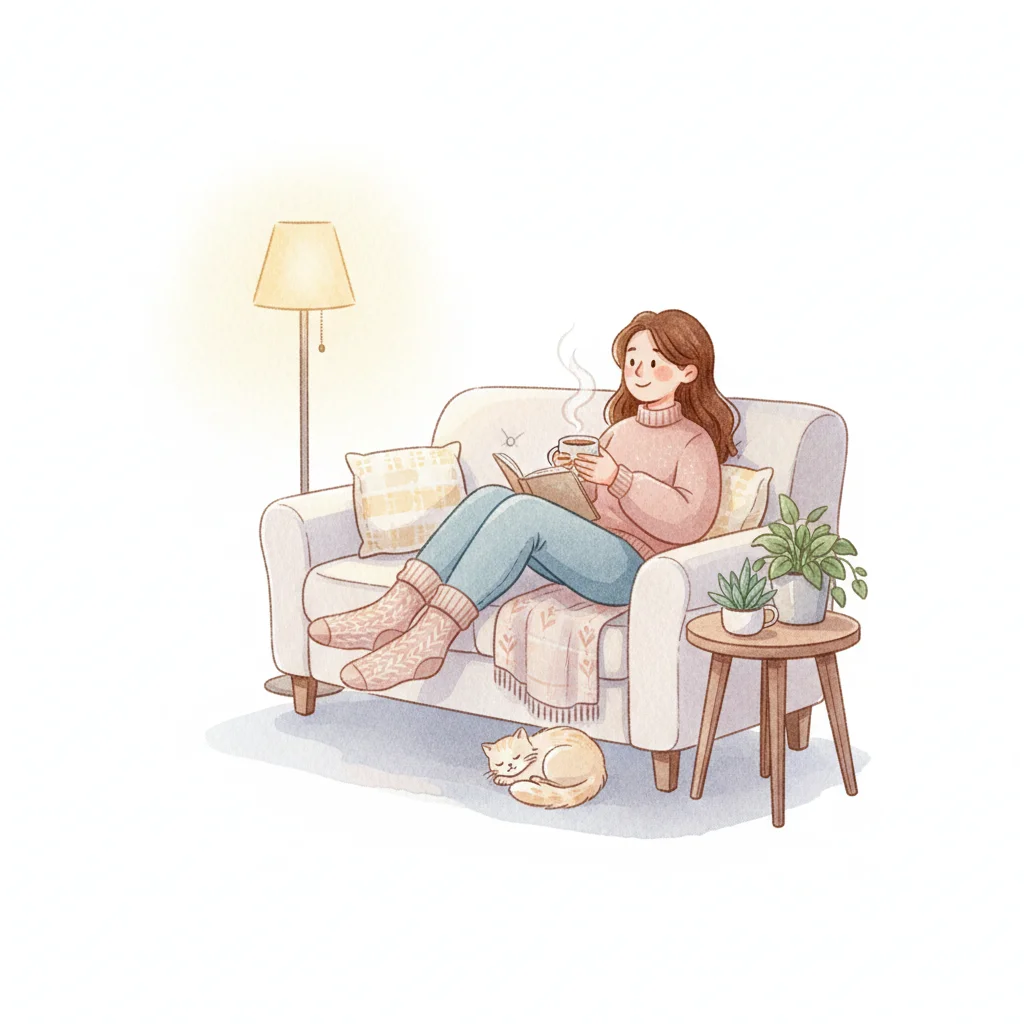
ficar
to stay
Fico em casa.
I'm staying home.

ficar
to become
Fiquei feliz.
I became happy.
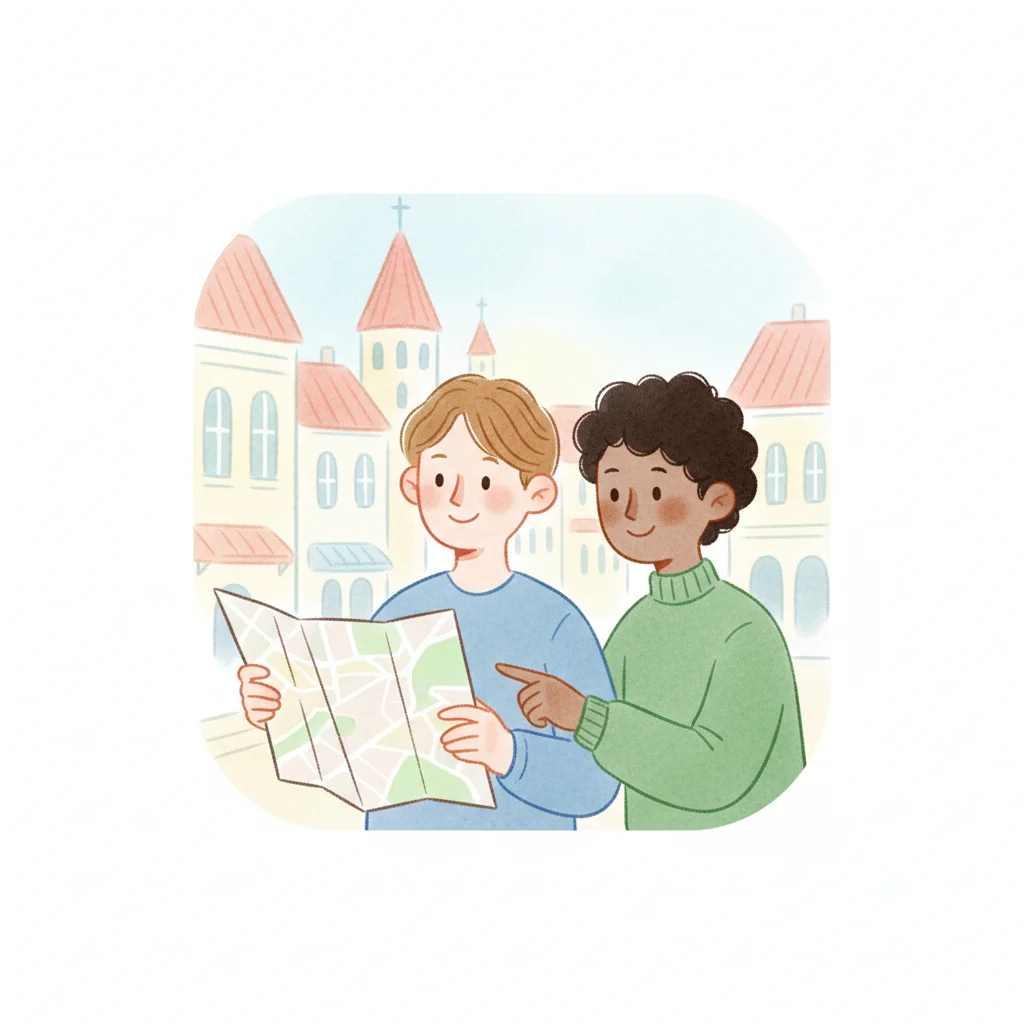
ficar
to be located
Fica longe?
Is it far?
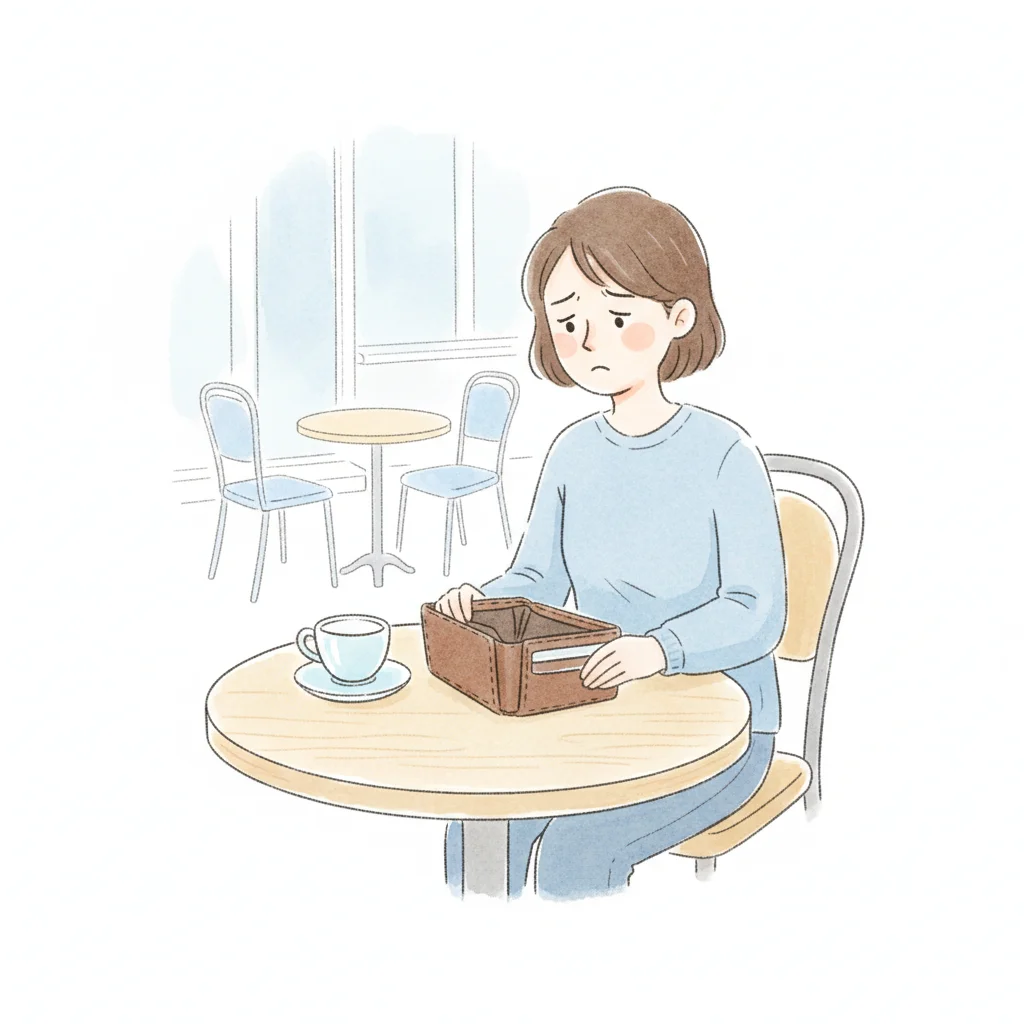
ficar
to end up
Ficou sem dinheiro.
He ended up without money.
ficar
to remain (in a state)
Ficou quieto.
He stayed quiet.
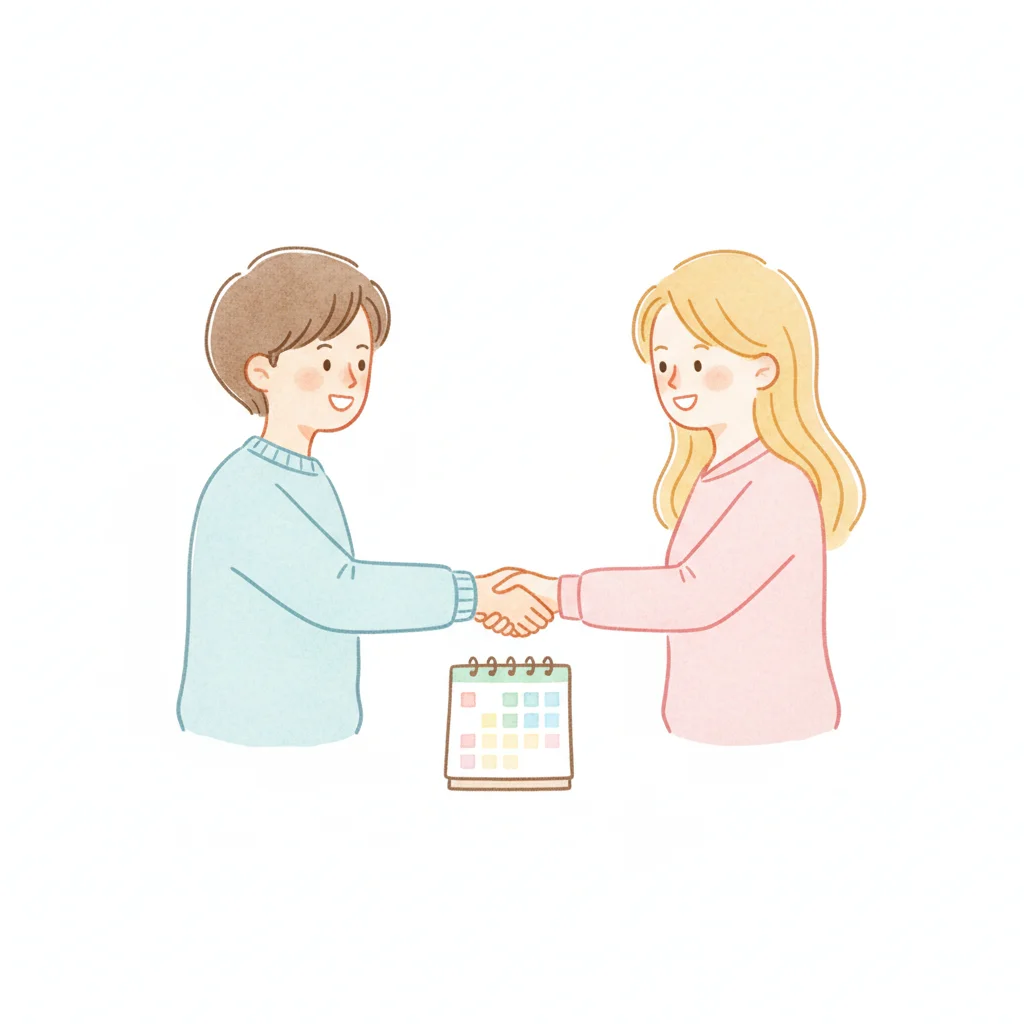
ficar
to arrange / agree
Ficámos assim.
We agreed to leave it like that.
ficar in sentences:
Fico em casa hoje.           → I'm staying home today.         (to stay)
Ficaste surpreendido?        → Were you surprised?             (to become)
Onde fica o hospital?        → Where is the hospital?          (to be located)
Ficou sem emprego.           → He ended up without a job.      (to end up)
Ficou quieto.                → He stayed/remained quiet.       (to remain in state)
Ficámos assim.               → We agreed/left it like that.    (to arrange/agree)
Fico com este.               → I'll take/keep this one.        (to keep/take)
Ficou a estudar.             → He stayed studying / kept studying. (continued action)

ficar — present tense
eu        fico
tu        ficas
ele/ela   fica
nós       ficamos
vocês     ficam
eles/elas ficam
The thread connecting all these: something remaining in a position, state, or situation.
deixar — to leave, let, stop
The core of deixar: releasing control of something.
deixar — common meanings in examples
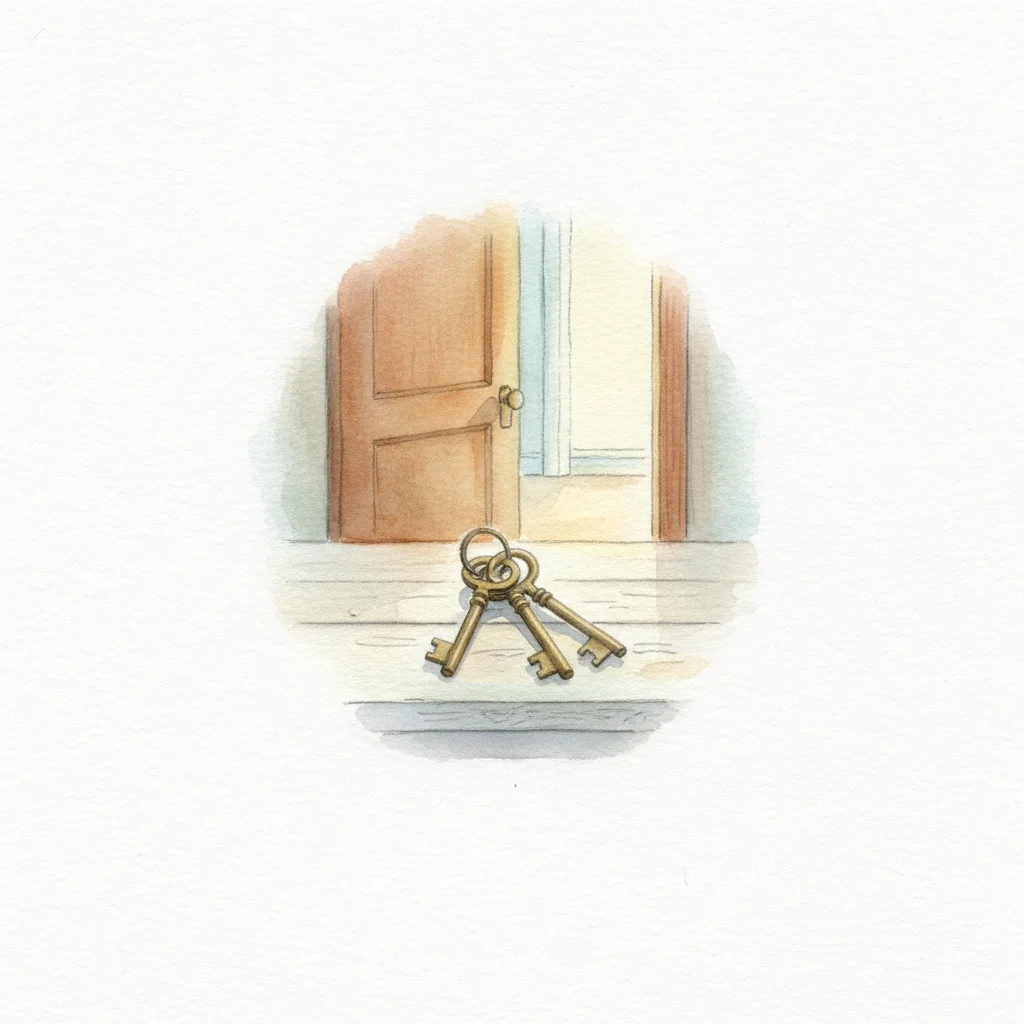
deixar
to leave (behind)
Deixa as chaves aqui.
Leave the keys here.
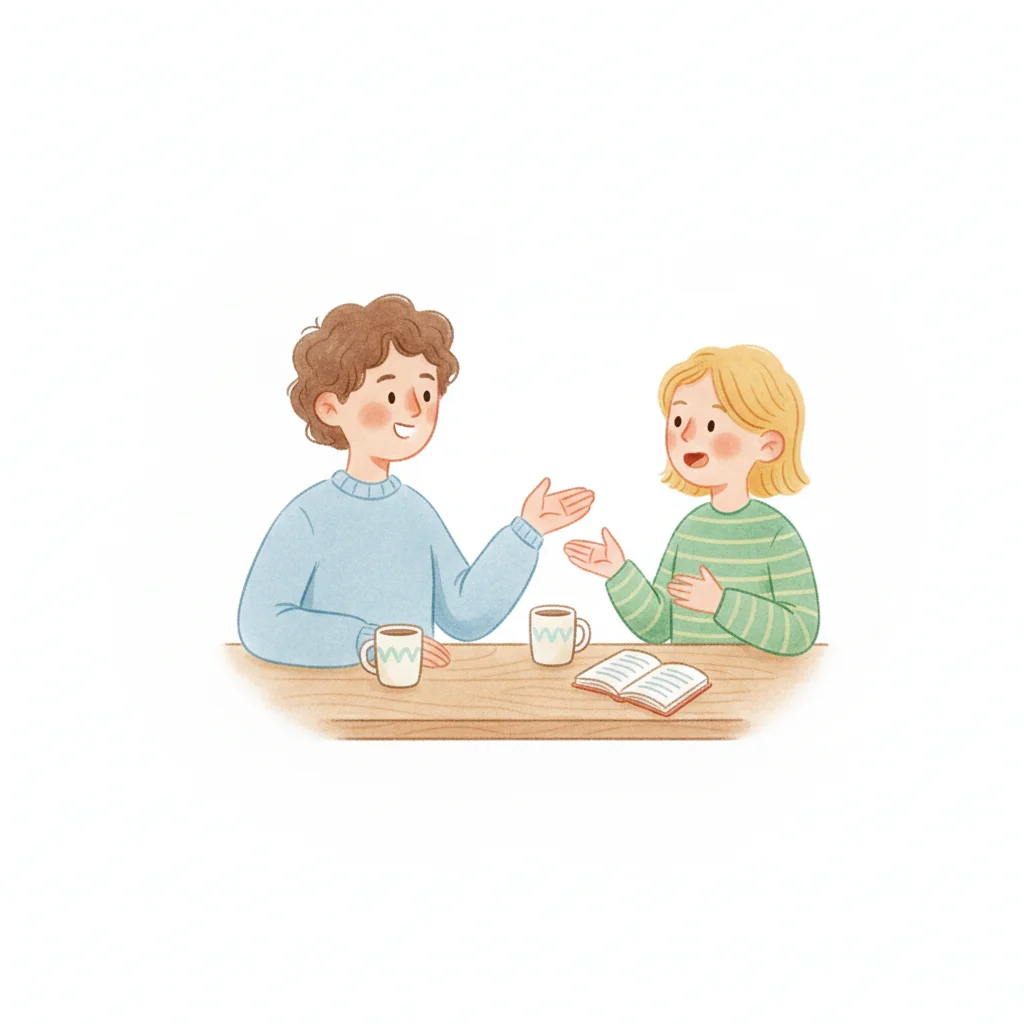
deixar
to let / allow
Deixa-me falar.
Let me speak.
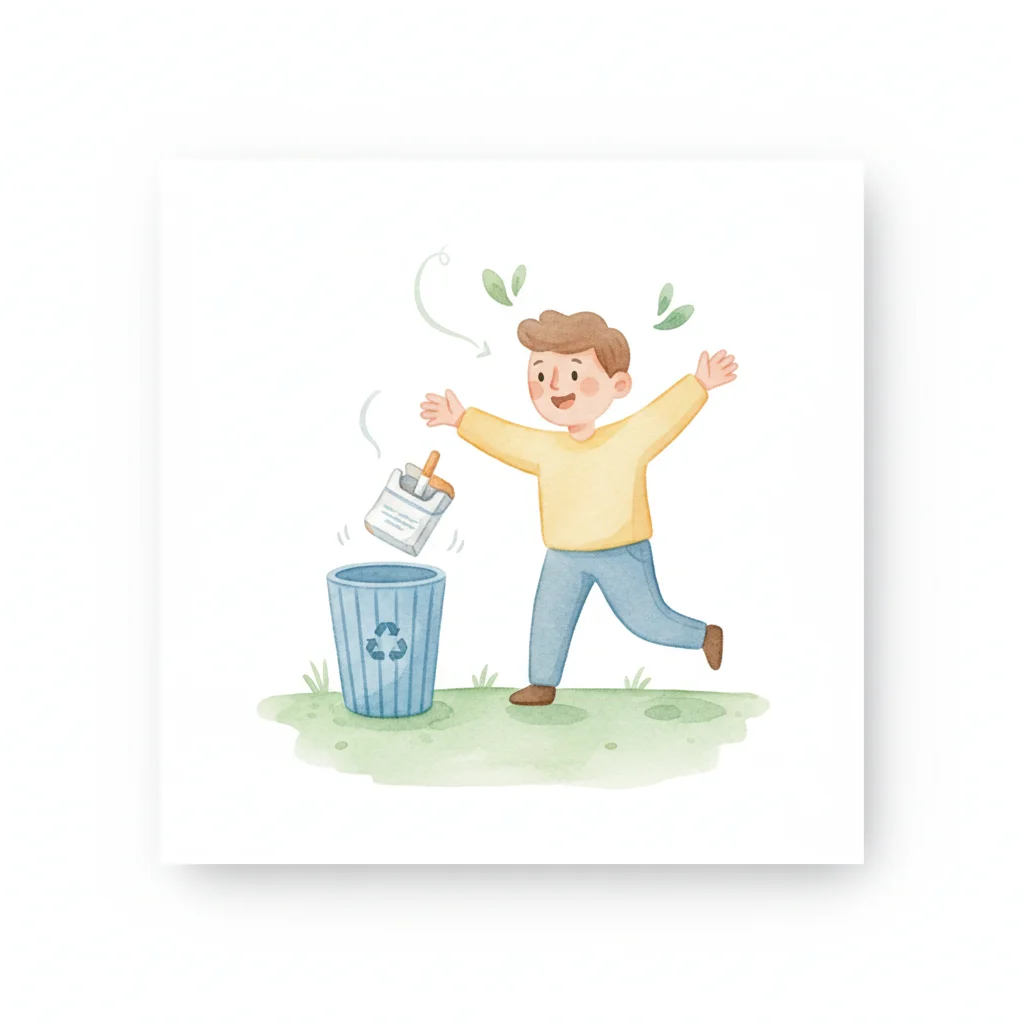
deixar
to stop
Deixa de fumar!
Stop smoking!
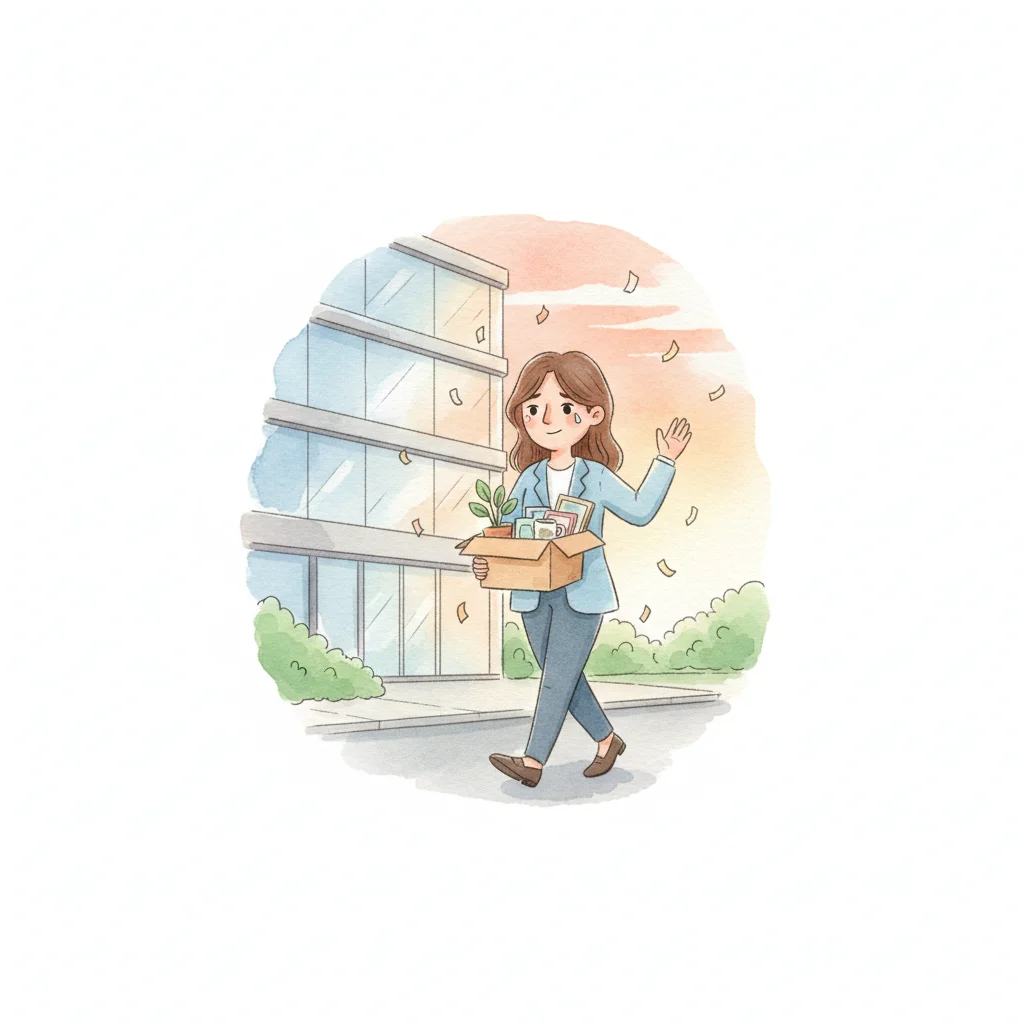
deixar
to quit / leave (job)
Deixou o emprego.
He quit his job.
acabar — to end, to finish, to have just done
The core of acabar: something reaching its end.
O filme acabou.              → The film ended.
Acabei o trabalho.           → I finished the work.
Acabei de chegar.            → I've just arrived.      ← acabar de + infinitive
Acabou com ele.              → She broke up with him.  (ended the relationship)
Acabei com o chocolate.      → I finished all the chocolate. (used it all up)
Note: acabar de + infinitive = to have just done something. This is one of the most useful phrases for the CIPLE speaking section.
Acabo de receber a carta.    → I've just received the letter.
Ela acabou de sair.          → She just left.
passar — to pass, to spend (time), to go through, to iron
Core logic: movement through or across something (physical or temporal).
O autocarro passou.          → The bus passed / went by.
Passámos férias em Sintra.   → We spent our holiday in Sintra.
Como passaste o fim de semana? → How did you spend the weekend?
Podes passar o sal?          → Can you pass the salt?
Preciso de passar a roupa.   → I need to iron the clothes.  (iron = move across fabric)
A dor vai passar.            → The pain will pass.
Passa bem!                   → Take care! / Fare well!
O que se passa?              → What's happening? What's going on?
levar — to take, to carry, to lead to, to last
Core logic: taking something from here to there — physically or metaphorically.
Leva o guarda-chuva.         → Take the umbrella (with you).
O táxi leva-te ao aeroporto. → The taxi will take you to the airport.
Quanto tempo leva?           → How long does it take?
Leva 30 minutos.             → It takes 30 minutes.
Isso levou-me a pensar...    → That led me to think...
Levei uma multa.             → I got a fine. (fined was brought to me)
💡 "Quanto tempo leva?" (How long does it take?) is one of the most useful phrases for the CIPLE oral section. Learn it cold — it works for travel, appointments, waiting, and any situation where time matters.
andar — to walk, to be (in a state), to go around doing
Core logic: ongoing movement or activity — not going somewhere specific, but being in a continuous process.
Ando a pé para o trabalho.   → I walk to work.
Ando cansado ultimamente.    → I've been tired lately.     (ongoing state)
Anda a estudar português.    → He's been studying Portuguese. (ongoing action)
Anda às voltas com isso.     → He's going around and around with that. (struggling)
Como andas?                  → How are you? (How are things going?)

andar — present tense
eu        ando
tu        andas
ele/ela   anda
nós       andamos
vocês     andam
eles/elas andam
7. The Four Tenses You Actually Need
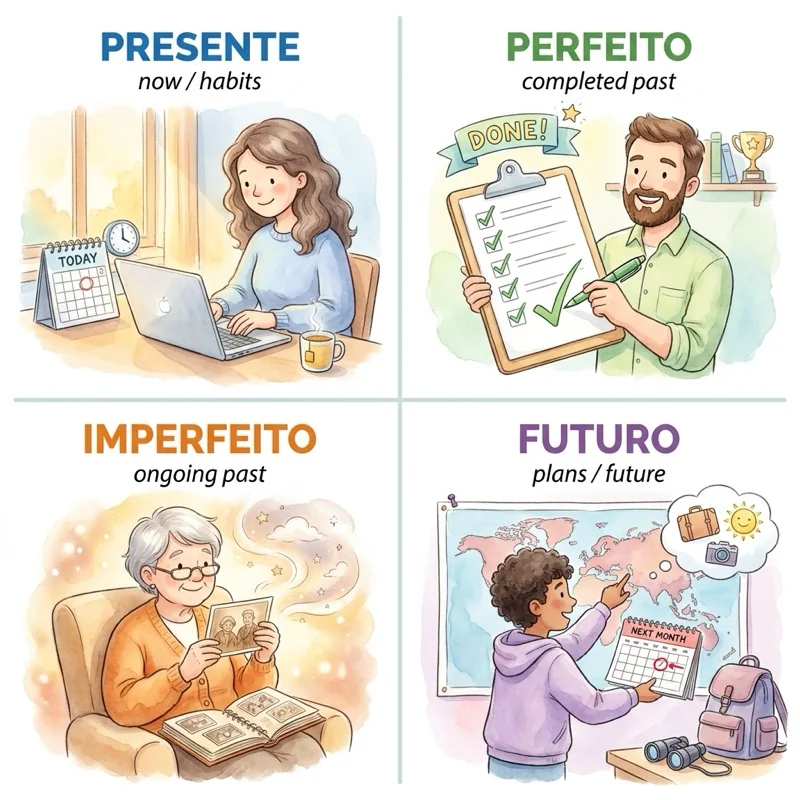
For CIPLE A2, you need the present, a completed past, the immediate future — and you need to recognise the pretérito imperfeito in reading (descriptions, habits, background). Four tense patterns cover this.
A mesma ideia, quatro tempos (decore o padrão):
Hoje trabalho em casa. (presente)
Ontem trabalhei muito. (pretérito perfeito)
Amanhã vou trabalhar cedo. (ir + infinitivo)
Antigamente trabalhava no turno da noite. (imperfeito — sobretudo na leitura)STEP 1 — Find the stem: remove the infinitive ending
falar → fal- comer → com- partir → part-
STEP 2 — Add the ending for the tense and person you need:
-AR verbs -ER verbs -IR verbs
──────────────────────────────────────────────────────────
PRESENTE
eu -o -o -o
tu -as -es -es
ele/ela -a -e -e
nós -amos -emos -imos
vocês/eles -am -em -em
PRETÉRITO PERFEITO (completed past)
eu -ei -i -i
tu -aste -este -iste
ele/ela -ou -eu -iu
nós -ámos -emos -imos
vocês/eles -aram -eram -iram
PRETÉRITO IMPERFEITO (background past / reading recognition)
eu -ava -ia -ia
tu -avas -ias -ias
ele/ela -ava -ia -ia
nós -ávamos -íamos -íamos
vocês/eles -avam -iam -iam
FUTURO PRÓXIMO (no new endings — use ir + infinitive)
vou / vais / vai / vamos / vão + falar / comer / partir
Examples (falar / comer / partir):
Presente: falo / como / parto
Perfeito: falei / comi / parti
Imperfeito: falava / comia / partia
Futuro: vou falar / vou comer / vou partirVerb forms in context — the same verbs across tenses
trabalhar
to work
Trabalhei ontem. Trabalho hoje.
I worked yesterday. I work today.
falar
to speak
Falei com ela. Falo bem.
I spoke with her. I speak well.
fazer
to do / make
Fiz o trabalho. Faço tudo.
I did the work. I do everything.
estar
to be (temporary)
Estou cansado. Estava em casa.
I'm tired. I was at home.
ser
to be (permanent)
Sou professor. Fui aluno.
I'm a teacher. I was a student.
ir
to go
Vou ao café. Fui ao banco.
I'm going to the café. I went to the bank.
ter
to have
Tenho tempo. Tive sorte.
I have time. I had luck.
morar
to live (address)
Moro aqui. Morava em Porto.
I live here. I used to live in Porto.
poder
can / be able to
Posso entrar? Não pude ir.
Can I come in? I couldn't go.
querer
to want
Quero sair. Queria ficar.
I want to leave. I wanted to stay.
sentir
to feel
Sinto-me bem. Senti falta.
I feel well. I missed (someone).
conseguir
to manage / achieve
Consigo falar. Consegui passar.
I can speak. I managed to pass.
Tense 1: Presente (Present)
Used for: what is happening now, habits, facts, scheduled events.
Regular verbs follow three patterns based on their infinitive ending:
         -AR verbs        -ER verbs        -IR verbs
         falar (speak)    comer (eat)      partir (leave)
─────────────────────────────────────────────────────────
eu       falo             como             parto
tu       falas            comes            partes
ele/ela  fala             come             parte
nós      falamos          comemos          partimos
vocês    falam            comem            partem
eles     falam            comem            partem
Falo português. → I speak Portuguese.
Ela come às 13h. → She eats at 1pm.
O comboio parte às 9h. → The train leaves at 9.💡 -ar verbs are the most common (roughly 90% of all verbs). Learn the -ar ending pattern first and you'll cover most of the language. The three present-tense formulas: -ar → drop -ar, add -o/-as/-a/-amos/-am; -er → drop -er, add -o/-es/-e/-emos/-em; -ir → drop -ir, add -o/-es/-e/-imos/-em. See the full formula reference above for all tenses at once.
Tense 2: Pretérito Perfeito (Simple Past)
Used for: completed actions, things that happened at a specific moment.
         -AR verbs        -ER verbs        -IR verbs
         falar            comer            partir
─────────────────────────────────────────────────────────
eu       falei            comi             parti
tu       falaste          comeste          partiste
ele/ela  falou            comeu            partiu
nós      falámos          comemos          partimos
vocês    falaram          comeram          partiram
eles     falaram          comeram          partiram
Ontem falei com a médica. → Yesterday I spoke with the doctor.
Comemos no restaurante. → We ate at the restaurant.
O comboio partiu às 9h. → The train left at 9.Key time markers for the past:
ontem          → yesterday
anteontem      → the day before yesterday
na semana passada → last week
no mês passado → last month
no ano passado → last year
há dois dias   → two days ago
já             → already
Common irregular past forms (memorise these):
ser / ir    → fui, foste, foi, fomos, foram   (same form for both verbs!)
ter         → tive, tiveste, teve, tivemos, tiveram
fazer       → fiz, fizeste, fez, fizemos, fizeram
vir         → vim, vieste, veio, viemos, vieram
estar       → estive, estiveste, esteve, estivemos, estiveram
⚠️ ser and ir share the same past tense forms. Context tells you which is which: Fui ao mercado. → I went to the market. (ir) Foi difícil. → It was difficult. (ser)
Tense 3: Futuro com ir (Immediate Future)
Used for: what you're going to do, plans, intentions.
Formula: ir (present tense) + infinitive
Vou falar com ela.           → I'm going to talk to her.
Vai chover amanhã.           → It's going to rain tomorrow.
Vamos comer fora.            → We're going to eat out.
This is identical to English "going to" — the present tense of ir plus the base form of the verb. No new conjugation to learn.
🎯 CIPLE oral section: When describing plans and future events, this construction is what you need. "Vou registar-me no SEF" (I'm going to register at SEF), "Vou renovar a minha autorização de residência" (I'm going to renew my residence permit).
Key time markers for the future:
amanhã         → tomorrow
depois de amanhã → the day after tomorrow
na próxima semana → next week
no próximo mês → next month
em breve       → soon
mais tarde     → later
Tense 4: Pretérito Imperfeito (background past)
Used for: descriptions in the past, habits and routines that used to happen, background in a story, childhood memories.
Pretérito Perfeito  → completed action, specific moment
Pretérito Imperfeito → ongoing state, repeated habit, background

Ontem comi uma pizza.         → Yesterday I ate a pizza. (one event — Perfeito)
Quando era criança, comia pizza todos os dias.
                               → When I was a child, I ate pizza every day. (habit — Imperfeito)
Regular conjugations:
         -AR verbs        -ER verbs        -IR verbs
         falar            comer            partir
 eu      falava           comia            partia
 tu      falavas          comias           partias
 ele/ela falava           comia            partia
 nós     falávamos        comíamos         partíamos
 vocês   falavam          comiam           partiam
 eles    falavam          comiam           partiam
Key irregular forms (memorise — they appear constantly):
ser    → era, eras, era, éramos, eram
estar  → estava, estavas, estava, estávamos, estavam
ter    → tinha, tinhas, tinha, tínhamos, tinham
ir     → ia, ias, ia, íamos, iam
Quando era pequeno, morava no Porto.
→ When I was young, I lived in Porto.
Estava cansado e não queria sair.
→ I was tired and didn't want to go out.
Todos os dias ia ao café às 9h.
→ Every day I went to the café at 9.
O apartamento era pequeno mas tinha jardim.
→ The apartment was small but had a garden.quando era criança → when I was a child
antes → before
sempre → always (habitual)
todos os dias → every day
normalmente → normally / usually
antigamente → in the past / back then
naquela altura → at that time🎯 CIPLE reading: Imperfeito dominates narrative and descriptive passages. You may not write it much — but you must recognise it. Old neighbourhoods, childhood, how things used to work — all Imperfeito.
8. Modal Verbs: Want, Can, Must, Need
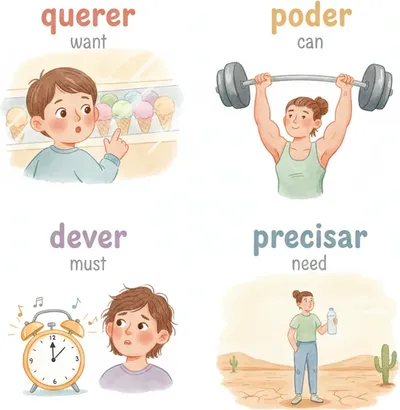
Modal verbs express how you relate to an action — whether you want it, can do it, must do it, or need to do it. In Portuguese, they work exactly like in English: modal verb + infinitive.
MODAL VERB    MEANING           EXAMPLE
poder         can / be able to  Posso ajudar?  → Can I help?
querer        to want           Quero um café. → I want a coffee.
dever         should / must     Deves descansar. → You should rest.
precisar de   to need to        Preciso de ir. → I need to go.
ter de / que  to have to        Tenho de trabalhar. → I have to work.
saber         to know how to    Sei conduzir. → I know how to drive.
conseguir     to manage to / can Não consigo abrir. → I can't get it open.
Ter de is standard in European Portuguese. Ter que is common in speech and in Brazilian Portuguese — both are understood, but use ter de in CIPLE writing.
Posso entrar?                → Can I come in?
Não posso falar agora.       → I can't talk right now.
Quero falar com o médico.    → I want to speak with the doctor.
Não quero esperar.           → I don't want to wait.
Deve ser aqui.               → It must be here / It should be here.
Preciso de um comprovativo.  → I need a proof document.
Tenho de ir às Finanças.     → I have to go to the Tax Office.
Sabe falar inglês?           → Do you know how to speak English?
poder vs saber — two ways of "can"
This distinction trips up English speakers because English uses "can" for both.
⚠️ poder = physically able to / allowed to saber = know how to (a skill) Posso nadar → I'm allowed to swim / I'm able to swim (right now) Sei nadar → I know how to swim (I have the skill) Posso ajudá-lo? → Can I help you? (offering assistance) Sabe cozinhar? → Can you cook? (do you have the skill?)
⚠️ conseguir — the third "can" When something is technically possible but you're struggling or trying: Não consigo perceber. → I can't understand (I'm trying but failing). Conseguiste arranjar? → Did you manage to fix it? Think: poder = allowed or able in principle, saber = has the skill, conseguir = actually pulls it off.
9. Building Any Sentence: Positive, Negative, Question
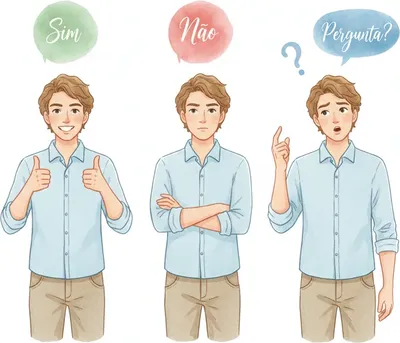
Once you have a subject and a verb, you can make three types of sentences from it.
O mesmo verbo, três formas:
Trabalho amanhã. (afirmativo)
Não trabalho amanhã. (negativo)
Trabalhas amanhã? (pergunta — entoação sobe no fim)
Positive
Moro em Lisboa.              → I live in Lisbon.
Ela trabalha no hospital.    → She works at the hospital.
Negative — just add não before the verb
Não moro em Lisboa.          → I don't live in Lisbon.
Ela não trabalha no hospital.→ She doesn't work at the hospital.
Não sei.                     → I don't know.
Não tenho carro.             → I don't have a car.
💡 Portuguese uses double negatives — and they're correct. Não vi nada. (I didn't see anything. Literally: Not saw nothing.) Não fui nunca. (I never went. Literally: Not went never.) This is standard Portuguese, not a mistake.
Question — same words, different intonation (usually)
Unlike English, Portuguese doesn't rearrange the word order for questions. You can ask a question by simply raising your voice at the end.
Moras em Lisboa?             → Do you live in Lisbon?  (voice rises at end)
Trabalha aqui?               → Do you work here?
Tem mesa para dois?          → Do you have a table for two?
For more explicit questions, use question words at the start:
o que?    → what?       O que quer?      What do you want?
quem?     → who?        Quem é?          Who is it?
onde?     → where?      Onde fica?       Where is it?
quando?   → when?       Quando chega?    When does it arrive?
como?     → how?        Como se chama?   What's your name?
porque?   → why?        Porque é tarde?  Why is it late?
qual?     → which?      Qual prefere?    Which do you prefer?
quanto?   → how much?   Quanto custa?    How much does it cost?
🎯 CIPLE oral section: The exam tests interaction, which means asking and answering questions. The question words above are your tools. Practice saying each one followed by a verb: Onde fica... / Quando abre... / Quanto custa...
10. Connectors: Gluing Ideas Together
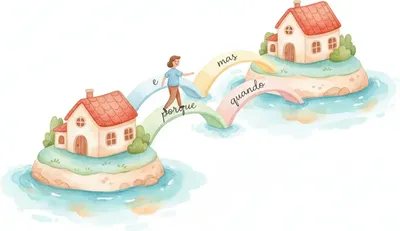
A2 writing means sentences that connect. A 60–80 word CIPLE response cannot be six separate unconnected sentences — you need glue words.
Frases curtas com conectores (uma respiração):
Trabalho muito, mas gosto do que faço.
Faltei porque estava doente.
Se chover, fico em casa.
Ela estudou; depois descansou um pouco.
The essential connectors
CONNECTOR    MEANING          EXAMPLE
e            and              Moro em Lisboa e trabalho em Sintra.
mas          but              Gosto, mas é caro.
porque       because          Faltei porque estava doente.
quando       when             Quando chego a casa, como.
se           if               Se puder, venho amanhã.
que          that             Acho que está fechado.
também       also / too       Eu também quero.
então        so / then        Estava cansado, então fui dormir.
depois       after / then     Comi e depois saí.
antes de     before           Telefona antes de vires.
por isso     therefore / so   Está fechado, por isso voltei.
embora       although         Embora seja caro, é bom.
como         as / since       Como está ocupado, espero.
já que       since / given    Já que estás aqui, fica para jantar.
Building longer sentences — step by step
SIMPLE:
Estava doente. Não fui trabalhar.
→ I was ill. I didn't go to work.

CONNECTED:
Estava doente, por isso não fui trabalhar.
→ I was ill, so I didn't go to work.

MORE NATURAL:
Como estava doente, não fui trabalhar — e por isso precisei de um comprovativo médico.
→ Since I was ill, I didn't go to work — and that's why I needed a medical certificate.
🎯 CIPLE writing section: The difference between a Suficiente (55%) and a Bom (70%) in writing is almost always connectors. Short, choppy sentences get penalised for lack of cohesion. Aim for at least 3 different connectors in your 60–80 word response.
11. Pronouns: Who Is Doing What
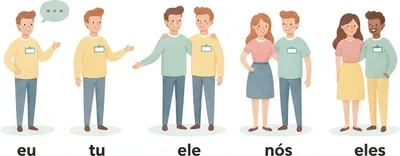
Pronomes em mini-diálogos (PT europeu):
Eu ligo, tu atendes.
Ela espera à entrada; ele chega já.
Nós ajudamos com os documentos, vocês decidem o horário.
Eles moram cá em cima, elas moram lá em baixo no Bairro Alto.
Subject pronouns
PRONOUN    MEANING           NOTE
eu         I
tu         you               informal — use with friends, family, children
ele        he / it (masc.)
ela        she / it (fem.)
nós        we
vocês      you (plural)      standard plural "you" in European Portuguese
eles       they (masc./mixed)
elas       they (fem.)
você       you               more formal in Portugal, common in Brazil
⚠️ tu vs você in European Portuguese In Portugal, tu is the normal informal "you" between people who know each other. Você is more formal or distant. Many learners from Brazilian materials use você for everything — this sounds odd in Portugal for everyday conversation. Use tu with people your age and younger; use você or the person's title (o senhor / a senhora) for formal situations.
Direct object pronouns (replacing the object)
me      me          Podes ajudar-me?     → Can you help me?
te      you         Vejo-te amanhã.      → I'll see you tomorrow.
o/a     him/her/it  Comprei-o.           → I bought it.
nos     us          Ele viu-nos.         → He saw us.
vos     you (pl.)
os/as   them        Vi-os ontem.         → I saw them yesterday.
Indirect object pronouns
lhe     to him / to her / to you (formal sing.)
lhes    to them / to you (formal plural)

Disse-lhe que estava ocupado.    → I told him/her I was busy.
Posso dar-lhe a informação?      → Can I give you the information?
Escrevi-lhe um email.            → I wrote him/her an email.
Não lhes respondi ainda.           → I haven't replied to them yet.
🎯 CIPLE writing: Formal letters (Section 15) need lhe — Escrevo-lhe para informar… is a standard opening in European Portuguese. Without it, a formal letter can sound incomplete.
For A2, you mainly need me (me), te (you-informal), and the occasional o/a (it/him/her). Don't try to master all object pronouns at once — the exam doesn't require complex pronoun constructions.
12. Numbers, Time, Dates, and Days
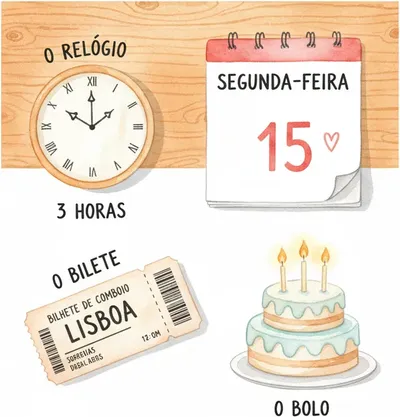
Numbers 1–20
1  um/uma      2  dois/duas   3  três       4  quatro
5  cinco       6  seis        7  sete       8  oito
9  nove        10 dez         11 onze       12 doze
13 treze       14 catorze     15 quinze     16 dezasseis
17 dezassete   18 dezoito     19 dezanove   20 vinte
Números em frases reais:
Tenho dois filhos e uma neta.
São vinte euros com o IVA incluído.
Trabalho cinco dias por semana.
A sala é no terceiro andar, à direita.Numbers 21–100
21  vinte e um       30  trinta
40  quarenta         50  cinquenta
60  sessenta         70  setenta
80  oitenta          90  noventa
100 cem / cento      1000 mil
Pattern: 21 = vinte e um, 35 = trinta e cinco, 48 = quarenta e oito.
⚠️ Numbers agree with gender. um becomes uma for feminine nouns. dois becomes duas. This matters for prices, quantities, and ages: Tenho trinta e dois anos. (masc.) vs Duas semanas. (fem.)
Telling time
Que horas são?               → What time is it?
São duas horas.              → It's two o'clock.
É meio-dia.                  → It's midday.
É meia-noite.                → It's midnight.
São três e meia.             → It's half past three. (três e trinta)
São quatro e um quarto.      → It's quarter past four.
São cinco menos um quarto.   → It's quarter to five.
São oito e vinte.            → It's twenty past eight.
For appointments and schedules (very common in CIPLE):
Às que horas?                → At what time?
Às dez horas.                → At ten o'clock.
Às 14h30.                    → At 14:30.
De manhã / de tarde / à noite → In the morning / afternoon / at night
Days of the week
segunda-feira  → Monday
terça-feira    → Tuesday
quarta-feira   → Wednesday
quinta-feira   → Thursday
sexta-feira    → Friday
sábado         → Saturday
domingo        → Sunday
💡 Days are not capitalised in Portuguese (unlike English). Also: in Portugal, the working week reference is dias úteis (working days), which you'll see constantly on official documents and in listening exercises about opening hours.
Months
janeiro    fevereiro  março      abril
maio       junho      julho      agosto
setembro   outubro    novembro   dezembro
Seasons
a primavera  → spring
o verão      → summer
o outono     → autumn
o inverno    → winter

No verão faz calor.          → In summer it's hot.
No inverno chove muito.      → In winter it rains a lot.
Dates
Que dia é hoje?              → What day is today?
Hoje é o dia 15 de março.    → Today is the 15th of March.
O meu aniversário é a 3 de julho. → My birthday is on the 3rd of July.
🎯 CIPLE exam: Dates, times, and schedules appear in almost every listening exercise and many reading tasks. A transport timetable, a doctor's appointment card, a notice about opening hours — all require reading numbers, days, and times accurately. Practice these until they're automatic.
13. Directions and Location
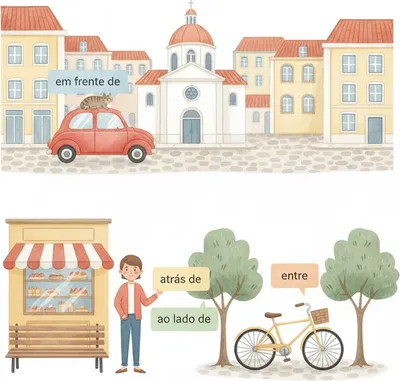
The CIPLE oral section includes a role-play where you might ask for or give directions. These phrases are also essential for reading maps and signs.
Pergunta e resposta, uma linha cada:
Onde fica o correio, por favor?
É do lado da farmácia, não dá para errar.
Vire à direita na rotunda e pare no semáforo.
Fica perto da estação de comboios.
Asking for directions
Desculpe, onde fica...?      → Excuse me, where is...?
Como se vai para...?         → How do you get to...?
É longe daqui?               → Is it far from here?
Quanto tempo leva a pé?      → How long does it take on foot?
Giving directions
à direita      → to the right     Vire à direita.    → Turn right.
à esquerda     → to the left      Vire à esquerda.   → Turn left.
em frente      → straight ahead   Siga em frente.    → Go straight ahead.
para trás      → behind / back    Volte para trás.   → Go back.
sempre em frente → keep straight  Siga sempre em frente.
na próxima rua → on the next street
na segunda rua → on the second street
no cruzamento  → at the crossroads
no semáforo    → at the traffic lights
Prepositions of place
em / no / na    → in / at         Estou no banco.     I'm at the bank.
perto de        → near            Fica perto da estação.  Near the station.
longe de        → far from        É longe do centro.  Far from the centre.
ao lado de      → next to         Ao lado do correios. Next to the post office.
em frente de    → in front of     Em frente da câmara. In front of the town hall.
atrás de        → behind          Atrás do supermercado. Behind the supermarket.
entre           → between         Entre o café e o banco. Between the café and bank.
em cima de      → on top of       Em cima da mesa.    On the table.
em baixo de     → under           Em baixo da ponte.  Under the bridge.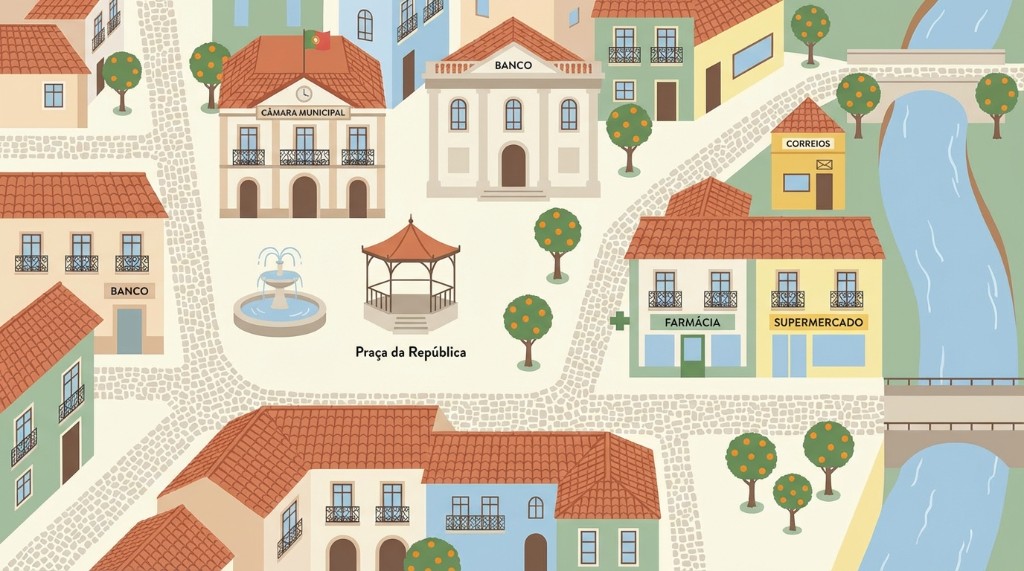
Town square map: directions and places (CIPLE-style vocabulary)
14. 20 Action Verbs for CIPLE Topics
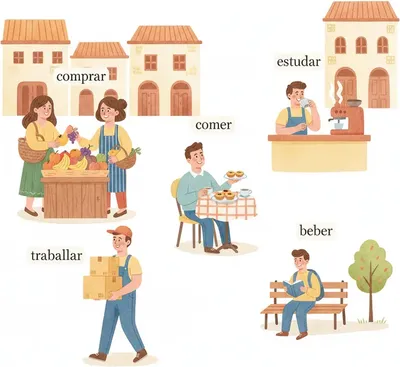
The CIPLE tests your ability to handle everyday situations. These 20 verbs appear constantly in the exam's themes: shopping, transport, health, housing, services.
Mini-diálogo de serviço (decore o ritmo):
Bom dia, quero comprar um bilhete de ida e volta.
Pago com cartão, se faz favor.
Pode trazer a conta quando tiver um minuto?
Obrigado pela ajuda, tenha um bom dia.
VERB MEANING EXAMPLE
comprar to buy Quero comprar um bilhete.
pagar to pay Pago com cartão.
vender to sell Vendem pão aqui?
pedir to ask for Posso pedir a conta?
reservar to book Quero reservar uma mesa.
marcar to schedule Marquei consulta para amanhã.
esperar to wait / hope Espere um momento, por favor.
chegar to arrive Chego às 10h.
sair to leave/go out Saio às 18h.
abrir to open A que horas abre?
fechar to close Fecha às 20h.
precisar de to need Preciso de ajuda.
trazer to bring Pode trazer a conta?
mandar to send Mandei um email.
ligar to call / turn on Ligo-lhe amanhã.
preencher to fill in Precisa de preencher o formulário.
assinar to sign Por favor, assine aqui.
entregar to deliver/hand Entrego os documentos amanhã.
receber to receive Recebi a carta.
renovar to renew Tenho de renovar o meu BI.🎯 CIPLE exam: The verbs preencher, assinar, entregar, and renovar are bureaucratic vocabulary that appears in the writing section (formal letters) and the listening section (official instructions). Learn them — they signal you're dealing with an official document context.
15. Writing Formulas for the CIPLE Exam
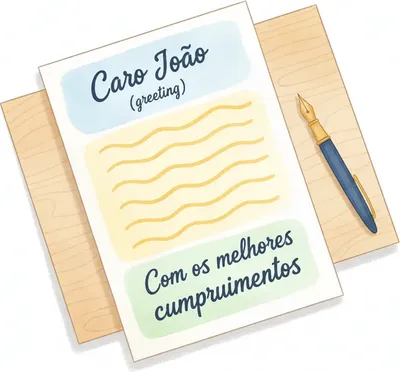
The writing section has two tasks: a short message (25–35 words) and a longer text (60–80 words). Both have predictable formats. Learn these templates and you spend exam time on content, not structure.
Modelo para preencher (corpo da mensagem em português):
Caro João, / Cara Maria,
… (uma frase com o motivo) …
Com os melhores cumprimentos,
Ana

Exmo. Senhor Diretor, / Exma. Senhora Diretora,
… (pedido claro, duas frases no máximo) …
Com os melhores cumprimentos,
Maria Silva
Short message — 25–35 words
This is typically a note, SMS, or informal message to a friend or family member.
Template: [Greeting], [reason for writing] + [main information] + [request or closing]
Olá [name],
[Main point in 1-2 sentences.]
[Any follow-up detail.]
[Simple closing.]
[Your name]

─────────────────────────────────────────────
Olá Ana,
Não posso ir ao jantar hoje porque estou doente.
Lamento muito. Podemos marcar para outro dia?
Um abraço,
Sofia
─────────────────────────────────────────────
(32 words — within the 25–35 range)
Longer text — 60–80 words
This is typically a semi-formal message: an email to a neighbour, a reply to an advertisement, a message to a service provider.
Template: [Opening] + [reason for writing] + [main point] + [supporting detail] + [request or action] + [closing]
Exmo./Exma. Sr./Sra. [Name] (formal)
Caro/Cara [Name]                      (semi-formal)
Olá [Name]                            (informal)

─────────────────────────────────────────────
Caro Sr. Ferreira,
Escrevo para informar que não posso comparecer à reunião de
amanhã porque tenho uma consulta médica marcada para a mesma
hora. Peço desculpa pelo inconveniente. Podemos remarcar para
quinta-feira de manhã? Estou disponível a partir das 10 horas.
Aguardo a sua resposta.
Com os melhores cumprimentos,
David Silva
─────────────────────────────────────────────
(72 words — within the 60–80 range)
Essential closing phrases
Um abraço           → (lit. a hug) — warm informal close
Beijinhos           → kisses — very informal, close friends
Com os melhores cumprimentos → With best regards — semi-formal
Atenciosamente      → Sincerely — formal
Aguardo a sua resposta → I look forward to your reply
Obrigado/a          → Thank you (before signing)
⚠️ Word count is enforced. Write fewer than 25 words on the short task or fewer than 60 on the longer one, and examiners mark the response as incomplete — regardless of how correct the language is. Always count before you finish.
🎯 CIPLE exam tip: Practice writing 60-word and 30-word texts until you can feel the length without counting every word. After 10–15 practice texts, you'll know instinctively when you're in range.
16. European vs Brazilian Portuguese: What Changes for CIPLE
If you learned Portuguese from Brazilian apps, shows, or friends — you already have a foundation. But the CIPLE tests European Portuguese specifically. Some differences are minor; some will cost you marks if you're not aware of them.
Frases em português europeu (registo de exame):
Vou de comboio para o trabalho quase todos os dias.
Tomo o pequeno-almoço às oito e saio às oito e meia.
O meu telemóvel ficou sem bateria no escritório.
CIPLE uses European Portuguese (Portugal), not Brazilian Portuguese.
Vocabulary differences — these cost marks in writing
CONCEPT           EUROPEAN PT        BRAZILIAN PT
breakfast         pequeno-almoço     café da manhã
bus               autocarro          ônibus
train (suburban)  comboio            trem
mobile phone      telemóvel          celular
apartment         apartamento        apartamento ✓ (same)
refrigerator      frigorífico        geladeira
ice cream         gelado             sorvete
computer          computador ✓       computador ✓
toilet            casa de banho      banheiro
chemist/pharmacy  farmácia ✓         farmácia ✓
swimming pool      piscina ✓          piscina ✓
pedestrian crossing passadeira       faixa de pedestres
⚠️ Using Brazilian vocabulary in the CIPLE writing section costs marks. The most common errors: writing ônibus instead of autocarro, café da manhã instead of pequeno-almoço, celular instead of telemóvel. Learn the European versions of everyday vocabulary.
Pronunciation differences — critical for listening
The CIPLE listening section uses European Portuguese audio. This sounds very different from Brazilian Portuguese.
FEATURE           EUROPEAN PT                    BRAZILIAN PT
Unstressed vowels Often swallowed / reduced       Clearly pronounced
"de"              sounds like "d" + swallowed e   "dʒi" (like "gee")
"te"              sounds like "t" + swallowed e   "tʃi" (like "chee")
Speed             Fast, reduced vowels            Slower, open vowels
Example: "pode"   sounds like "pod"              sounds like "podʒi"
Example: "tarde"  sounds like "tard"             sounds like "tardʒi"
💡 The fastest way to adjust your ear: listen to RDP Antena 1 (rr.pt) for 15 minutes every day. European Portuguese radio at natural speed. After 3–4 weeks, the accent will no longer sound unfamiliar.
Grammar differences
For A2, the main practical difference is how to say "you":
                  EUROPEAN PT        BRAZILIAN PT
Informal "you"    tu                 você
Formal "you"      você / o senhor    o senhor / a senhora
"you all"         vocês              vocês ✓ (same)
In Portugal, tu is the default informal address between people who know each other. In Brazil, você is used for almost everyone. For the CIPLE oral section, use tu with other candidates and você/o senhor/a senhora with the examiner.
17. The hyphen with object pronouns: Deixou-me, Dá-me…
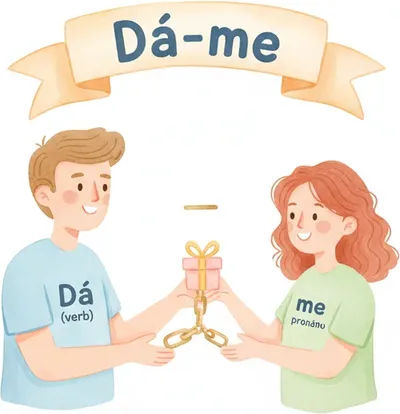
This guide uses two different kinds of “dash,” and they are not the same thing. In section titles, the long mark in deixar — to leave is ordinary punctuation (like “means” or “that is”). In real sentences, a short hyphen (-) joins the verb to a tiny object pronoun (me, te, o, a, nos, lhe, lhes, etc.) when that pronoun comes immediately after the verb. That pattern is called enclisis — and in European Portuguese the hyphen is part of correct spelling, not decoration.
So Deixou-me is literally “left” + “me,” glued to one word: deixou + -me. The same logic gives Diz-me, Dá-nos, Faz-me um favor. The same hyphen shows up in imperatives (e.g. Dê-me o livro) and in almost every dialogue in listening practice.
Enclisis (pronoun after the verb) — hyphen required in standard European spelling:
Deixou-me em paz.          → He/she left me alone.
Ela deu-nos a notícia.      → She gave us the news.
Diz-me a verdade.           → Tell me the truth. (informal)

Proclisis (pronoun before the verb) — no hyphen; common after não, que, relative/interrogative words:
Não me deixou.              → He/she didn't leave me.
Que te disse?                → What did he/she tell you?
Não nos disseram nada.       → They didn't tell us anything.
🎯 CIPLE tip: You do not need the full theory of mesóclise for A2. You do need to recognise verb-hyphen-pronoun in reading and listening, and to use it in simple writing when the pronoun follows the verb.
18. Colours: basic adjectives (European Portuguese)
Colours appear constantly in listening and reading (clothes, rooms, signs, descriptions) and are easy marks in short writing if you spell them cleanly. In Portuguese, colour words usually agree with the noun: uma camisa azul, carros brancos.
Cores em frases curtas:
Comprei uma camisa azul e uns sapatos pretos.
As paredes são brancas e a porta da cozinha é verde.
Gosto do sofá cor de rosa da sala.
vermelho / vermelha
red
azul
blue
verde
green
amarelo / amarela
yellow
laranja
orange
roxo / roxa
purple
rosa
pink
castanho / castanha
brown
preto / preta
black
branco / branca
white
cinzento / cinzenta
grey (EU PT)
turquesa
turquoise
Putting It All Together
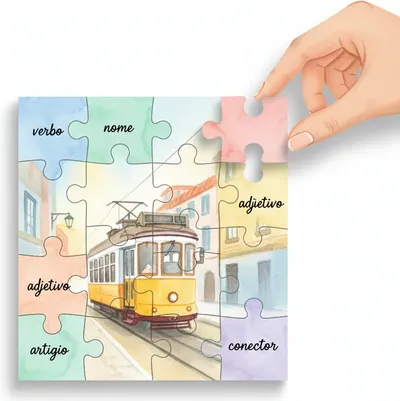
You now have the complete structure of A2 Portuguese:
- The SVO word order that carries every sentence
- The articles and agreement rules that hold nouns and adjectives together
- The 16 core verbs plus the next 20 regular/near-regular verbs for topics (opinions, health, transport)
- The four tense patterns you need (including recognising pretérito imperfeito in reading)
- The modals that express need, ability, and want
- The connectors that build longer, coherent texts
- The vocabulary of time, numbers, directions, and daily actions
- The writing templates for the CIPLE exam
- The European Portuguese features that distinguish the exam from what Brazilian materials teach
The CIPLE A2 does not test fluency. It tests whether you can communicate in predictable, everyday situations in European Portuguese — in writing and in speech. Everything on this page directly prepares you for those situations.
Your 600 words are the content. This is the structure that turns them into language.
🎯 Practice this, not just read it. Take any vocabulary word you've learned and build a sentence with it using the patterns in Section 8. Take any tense from Section 7 and practice it with five different verbs. Write one 60-word text per day using the template in Section 15. Grammar becomes automatic through use, not through reading about it.
Ready to test how much of this you can apply? Start your CIPLE A2 mock exam — free, 7 days →
Last updated: May 2026. All examples use European Portuguese as required for the CIPLE A2 exam.